ECZ UPDATE ON THE PRINTING OF BALLOT PAPERS AS AT 17TH JULY, 2026
POLITICSBy Unknown — Zambian Observer
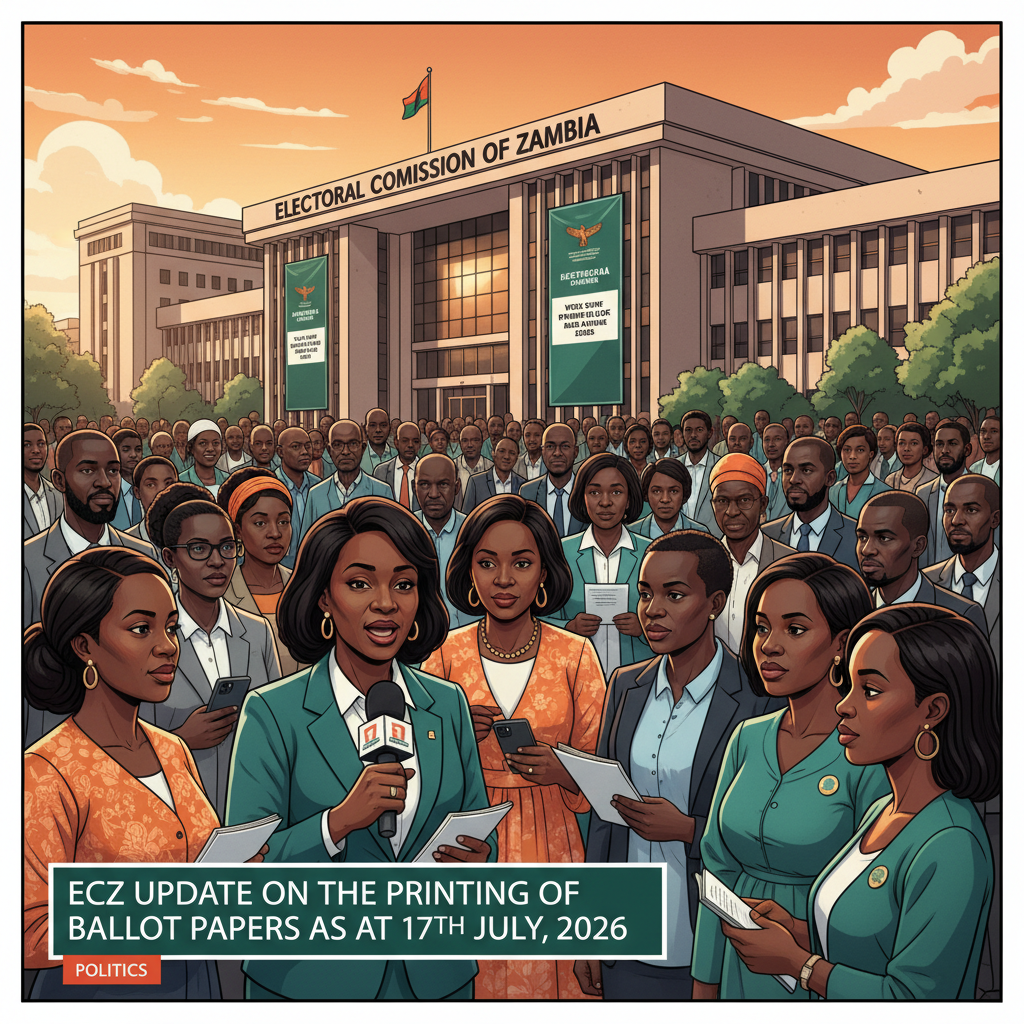
LUSAKA – The Electoral Commission of Zambia (ECZ) has reassured the nation regarding the progress of ballot paper printing for the eagerly anticipated August 13, 2026, general elections. As of July 17, 2026, the ECZ confirmed that a significant 68% of the total ballot papers, amounting to approximately 23 million out of an estimated 36 million, have been successfully printed and packaged. The first consignment of these crucial electoral materials is slated to arrive in Zambia by July 26th, a critical step towards ensuring a timely and credible election. The printing exercise, being undertaken by Al Ghurair Printing Company in Dubai, United Arab Emirates, has been under intense observation by various stakeholders, including representatives from political parties, civil society organizations, and the media. This inclusive approach is a deliberate effort by the ECZ to foster transparency and build public confidence in the electoral process, a commitment that has been lauded by some observers. ECZ Commissioner Macdonald Chipenzi, who is leading the delegation in Dubai, expressed optimism that the remaining ballot papers for National Assembly, mayoral, and local council elections would be completed swiftly, despite minor administrative hitches that caused a slight delay from the initial July 15th target. The decision to print ballot papers abroad has historically been a point of contention in Zambia, with concerns raised over costs and accessibility for oversight by smaller political parties. However, the ECZ maintains that local printers currently lack the capacity to handle the complex and high-security requirements of ballot paper production. The current process has seen enhanced transparency measures, with daily video updates and broader representation of political parties and civil society groups compared to previous elections. This increased scrutiny aims to mitigate allegations of impropriety that have sometimes plagued past electoral cycles. Concerns about the