Over 1,500 Luangwa farmers get food security support
BUSINESSBy Lusaka Times — Lusaka Times
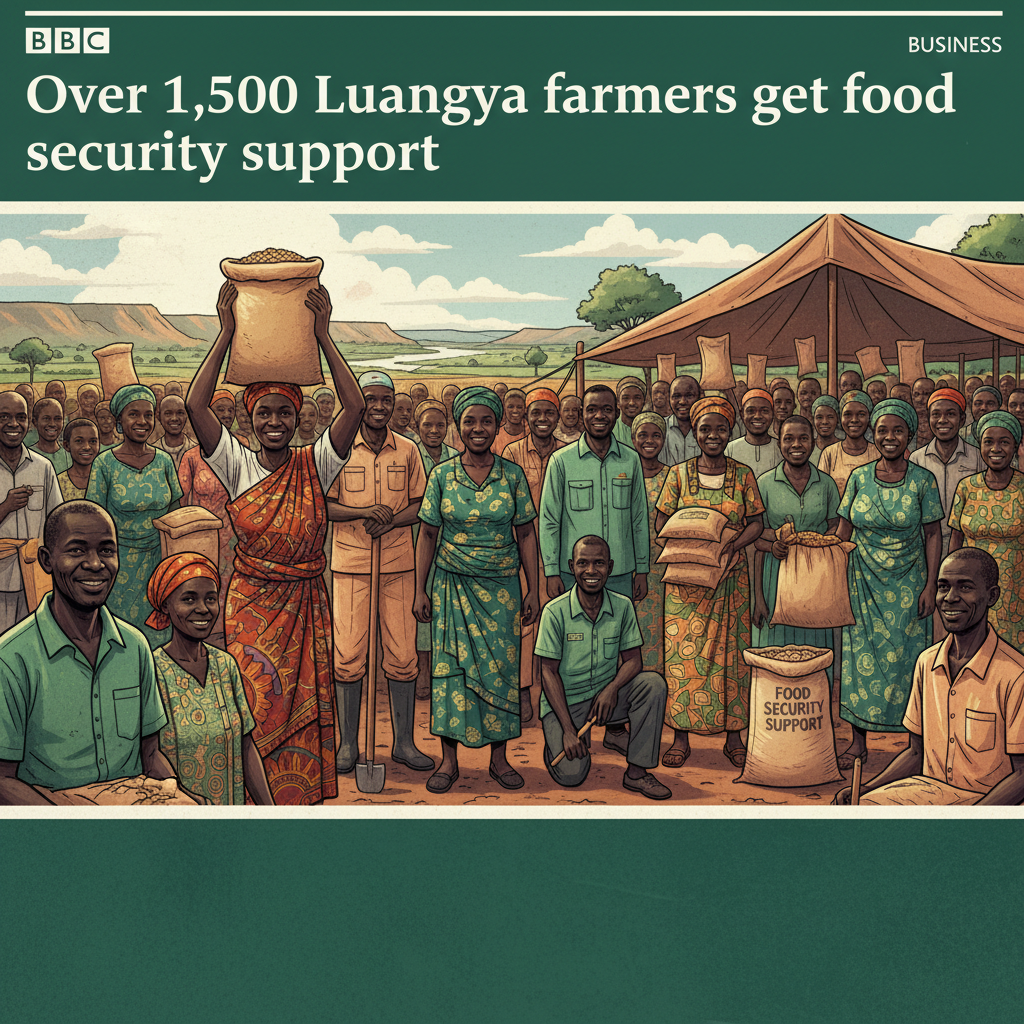
Luangwa District is poised for a significant boost in agricultural resilience as over 1,500 vulnerable but viable farmers have been earmarked to receive support under the government's crucial Food Security Pack (FSP) program for the 2026/2027 rainy season. This vital intervention, spearheaded by the Department of Community Development, underscores the Zambian government's ongoing commitment to strengthening household food security and empowering smallholder farmers, particularly in areas susceptible to climatic shocks. The FSP, a flagship social safety net program, provides beneficiaries with essential farming inputs, including seeds and fertilisers, designed to improve crop yields and promote sustainable agricultural practices. The Food Security Pack program was initially launched in November 2000 as a direct response to the challenges faced by small-scale farmers who had lost productive assets due to adverse climatic conditions and the lingering effects of structural adjustment policies in the 1990s. Its core objective is to transition vulnerable households from subsistence farming to more productive and self-sustaining agricultural ventures, ultimately contributing to poverty reduction and improved nutrition. The program operates through various components, including Rainfed Cropping, Wetland Cropping, and Alternative Livelihood Initiatives, ensuring a comprehensive approach to food security across Zambia's 116 districts. The selection criteria for beneficiaries are stringent, targeting households with adequate labour, access to land between 0.5 and 2 hectares, and no gainful employment, with additional consideration for female-headed households, child-headed households, and those caring for orphans or individuals with disabilities. The support provided to Luangwa farmers is particularly pertinent given Zambia's recent experiences with climate change impacts, such as prolonged dry spells and floods, which have severely affected agricultural output in various re