Zambia Election Standoff Looms Over Delayed Subsidized Farming Vouchers
AGRICULTUREBy Zambian Agribusiness — Zambian Agribusiness
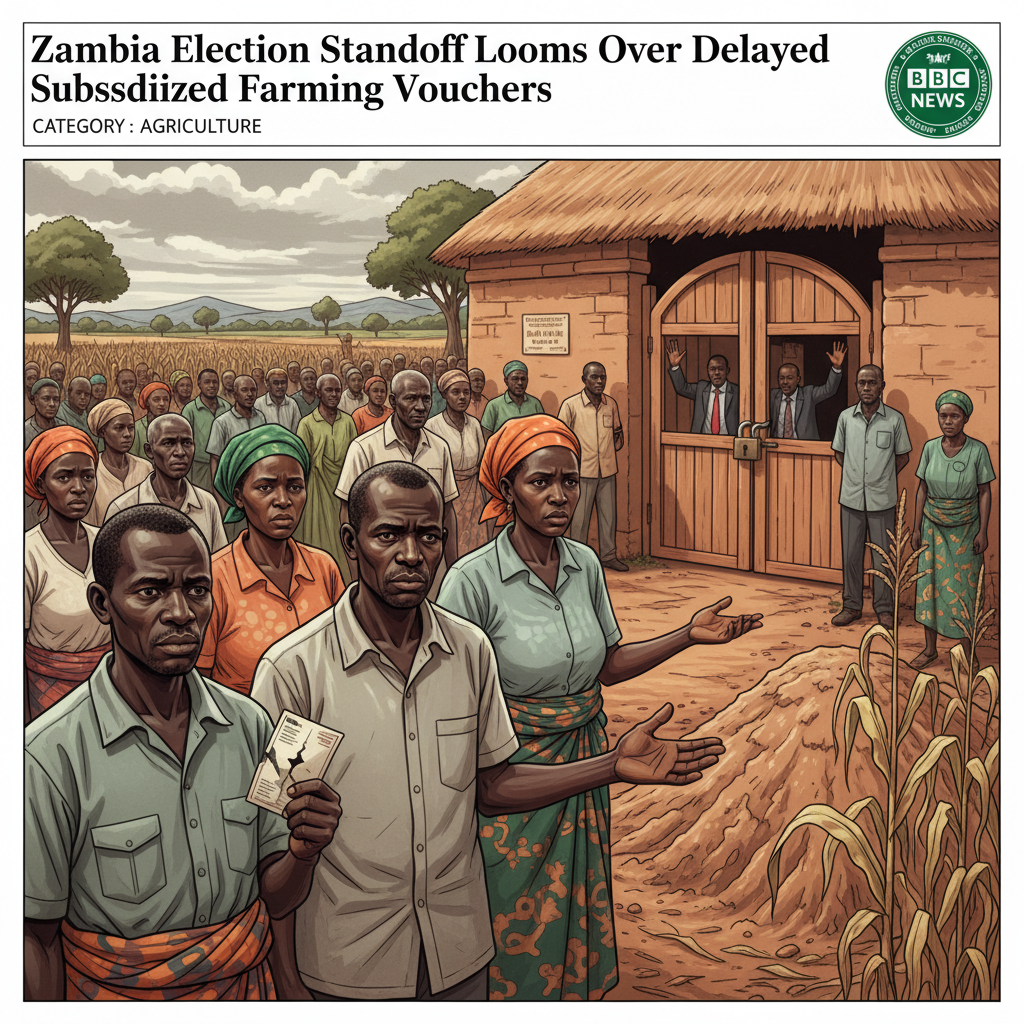
LUSAKA – Zambia's agricultural backbone, predominantly composed of small-scale farmers, is teetering on the brink of a significant crisis, with warnings of impending food insecurity echoing across the nation. The core issue stems from the protracted delay in the distribution of crucial subsidized farming input vouchers, a situation exacerbated by the country's tightly contested general elections slated for August 13. The Farmer Input Support Programme (FISP), designed to provide essential agricultural inputs like fertilizer and seeds at subsidized rates, is a lifeline for millions of Zambian farmers. However, the current delay in issuing these vital vouchers has left many in a precarious position, unable to adequately prepare for the upcoming planting season. With the rainy season fast approaching, the window for effective cultivation is narrowing rapidly, threatening to severely impact crop yields for the 2021-2022 agricultural cycle. Agricultural experts and farmer associations have voiced strong apprehension, suggesting that the political climate surrounding the elections may be contributing to the administrative bottlenecks. Historically, the timely distribution of FISP inputs has been a critical factor in ensuring national food security, particularly for the staple maize crop. Any disruption to this process has far-reaching consequences, potentially leading to reduced harvests, increased food prices, and heightened rural poverty. Representatives from various farmer cooperatives across provinces like Eastern, Southern, and Central have reported widespread anxiety among their members. "We are in a race against time," stated a spokesperson for the National Union of Small-Scale Farmers of Zambia. "Without these inputs now, many farmers will miss the optimal planting window, which means less food on the table for families and a potential deficit for the country next year. This is not just an economic issue; it's a matter of national survival." The government, th