U.S. Backs Zambia’s $491 Million Shift from Farms to Critical Minerals
BUSINESSBy Zambian Agribusiness — Zambian Agribusiness
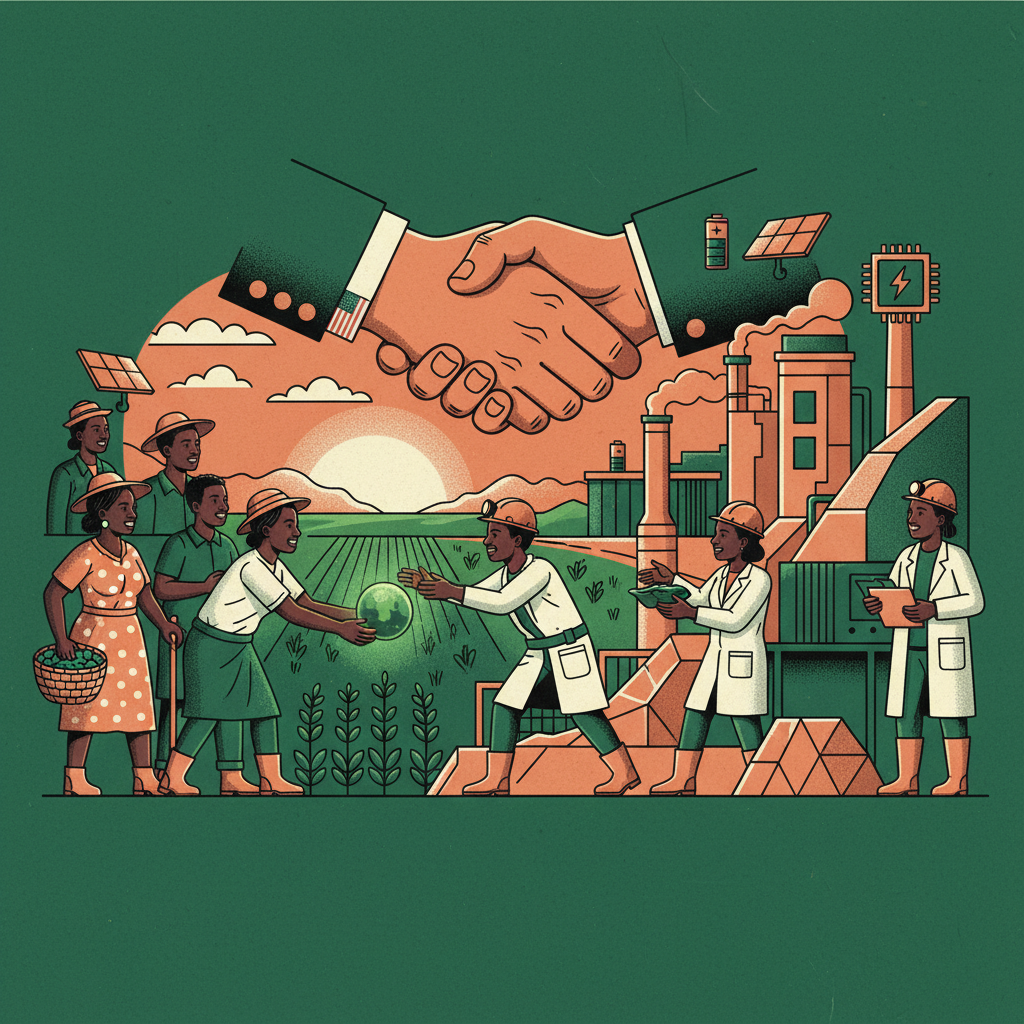
LUSAKA – Zambia has announced a significant strategic pivot, re-directing a substantial US$491 million grant from the United States, originally designated for agricultural development, towards bolstering critical infrastructure for its rapidly expanding critical minerals sector. This bold move, confirmed by government officials, signals Zambia's resolute ambition to cement its position as a vital global supplier of minerals essential for the green energy transition and advanced technologies. The grant, part of the Millennium Challenge Corporation (MCC) Compact, was initially intended to enhance productivity and market access within Zambia's agricultural landscape. However, following extensive consultations and a re-evaluation of national economic priorities, the Zambian government, with the concurrence of its American partners, has opted to channel these funds into areas that will directly support the extraction, processing, and transportation of critical minerals such as copper, cobalt, manganese, and rare earth elements. This re-prioritisation is seen as a pragmatic response to the surging global demand for these resources and Zambia's inherent competitive advantage in their abundance. Sources within the Ministry of Mines and Mineral Development indicate that the re-allocated funds will be instrumental in developing crucial infrastructure, including improved road networks leading to mining sites, enhanced power supply grids to support energy-intensive operations, and potentially modernised logistics hubs. Such investments are vital to unlock the full potential of Zambia's mineral wealth, reduce operational costs for miners, and attract further foreign direct investment into the sector. The government believes that a robust critical minerals sector will generate more substantial and sustainable economic benefits, including job creation and increased export earnings, compared to the initial agricultural focus, though agriculture remains a cornerstone of the econom