LAZ FLAGS ECZ’S DECISION TO SUSPEND PRESIDENTIAL CAMPAIGN ACTIVITIES OFFSIDE
POLITICSBy Zambian Observer — Zambian Observer
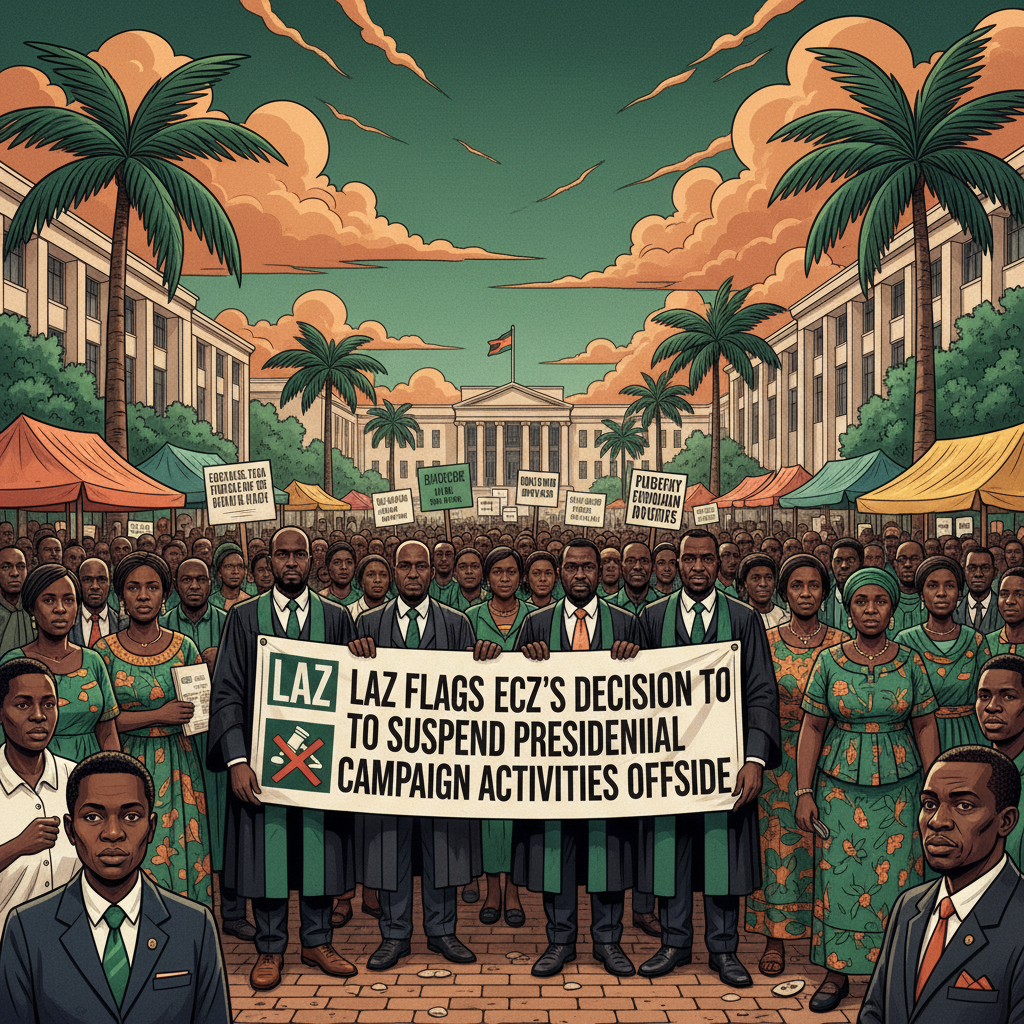
LUSAKA – The esteemed Law Association of Zambia (LAZ) has issued a stern advisory to the Electoral Commission of Zambia (ECZ), flagging its recent decision to suspend presidential campaign activities as a significant overstep of its constitutional mandate. In a statement released yesterday, LAZ underscored that the ECZ's powers, while extensive in overseeing elections, do not encompass dictating or suspending the campaign schedules of presidential candidates. LAZ's counsel comes amidst growing concerns regarding the ECZ's interpretation of its regulatory authority, particularly in the run-up to crucial elections. The legal body emphasized that the right to campaign, inherent to presidential aspirants and their political parties, is enshrined within the democratic framework of Zambia, allowing candidates to freely engage with the electorate. Any attempt to unilaterally halt these activities, LAZ argued, undermines the principles of free and fair elections and could potentially disenfranchise voters by limiting their access to candidates' messages. The Association further elaborated that the ECZ's primary role is to manage the electoral process, register voters, delimit constituencies, and ensure the transparent conduct of polls. While it has the power to enforce electoral codes of conduct and address breaches, this authority does not extend to arbitrarily suspending nationwide campaign efforts for the highest office. Such a decision, LAZ contended, would require clear statutory backing, which currently does not exist for presidential campaigns in the manner implied by the ECZ's action. This intervention by LAZ is not merely a legal technicality; it reflects a broader concern about institutional checks and balances within Zambia's governance structure. Political analysts suggest that the ECZ's move, if unchecked, could set a dangerous precedent, allowing future commissions to unduly influence the political landscape. The legal fraternity's stance is seen as a cruci