ZAMBIA NEEDS SISHUWA SISHUWA- Dr. Field C. Ruwe
POLITICSBy Dr. Field C. Ruwe — Zambian Observer
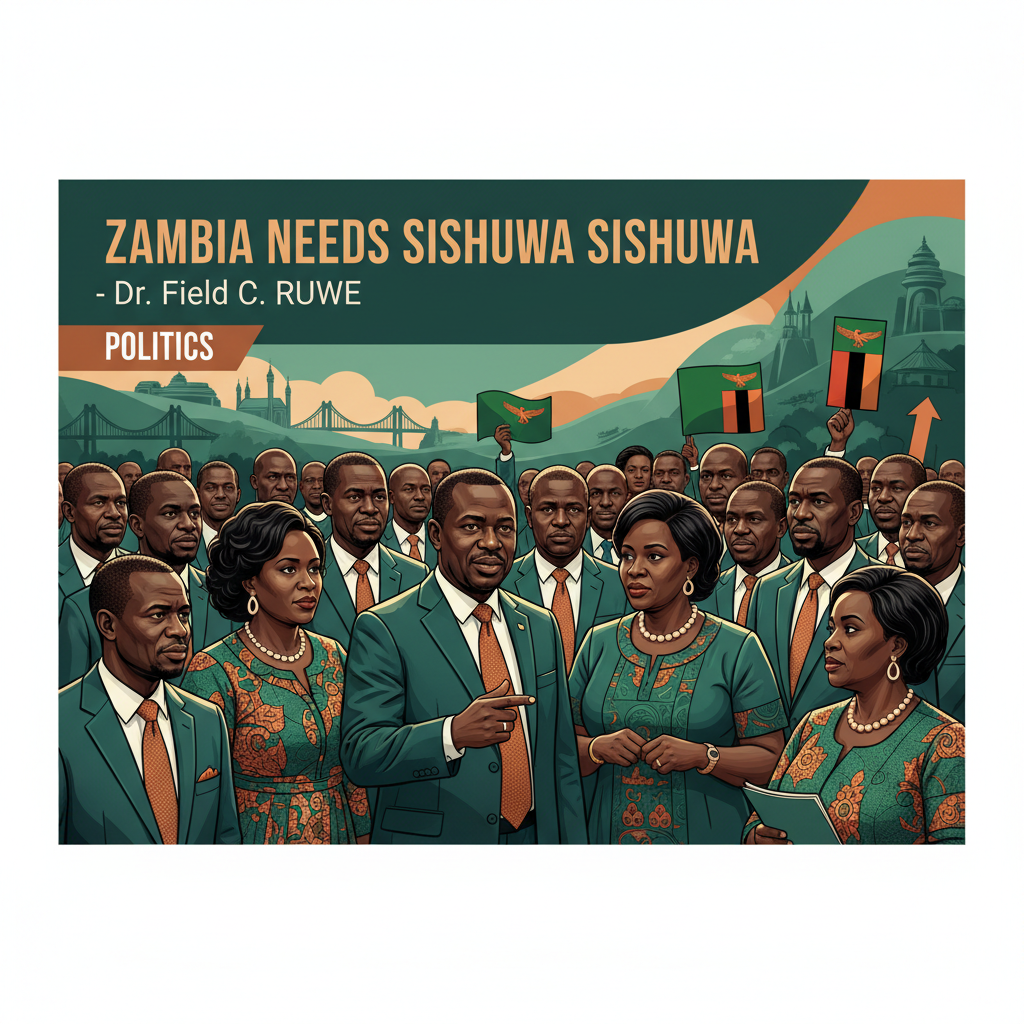
The debate surrounding the role of public intellectuals in Zambia has intensified following a recent commentary by Dr. Field C. Ruwe, which addresses the deep-seated fragmentation within the country's academic community. At the center of this discourse is Dr. Sishuwa Sishuwa, a prominent Zambian historian and political analyst whose critical commentaries on successive governments have earned him both international acclaim and sharp domestic scrutiny. Dr. Ruwe’s intervention highlights how political polarization within institutions like the University of Zambia affects the capacity of scholars to mount a unified front on matters of national governance and democratic accountability. This intellectual schism was brought to the fore following critiques by fellow academics, such as Dr. O'Brien Kaaba, who questioned whether certain public interventions cross the line from objective scholarship into partisan political activism. While international bodies and foreign academic networks frequently rally behind local critics facing state pressure, the local academic response remains notably divided. Critics argue that a distinction must be maintained between evidence-based peer-reviewed research and politically charged commentary, while supporters maintain that intellectual dissent is vital in holding power to account regardless of who occupies State House. Dr. Ruwe’s analysis places these local tensions within the historical context of Zambia's intelligentsia, recalling earlier eras when university voices collectively challenged executive overreach. Historically, Zambian academics have oscillated between serving as cooperative state partners and acting as fierce critics of the establishment. However, contemporary political dynamics have created an environment where intellectual independence is frequently tested by partisan loyalties and the pressures of political patronage. The implications of this fragmentation extend far beyond campus boundaries, influencing public trust