ZAMBIA CONDEMNS HOUTHI ATTACKS ON SAUDI ARABIA, CALLS FOR RESTRAINT
POLITICSBy Zambian Observer — Zambian Observer
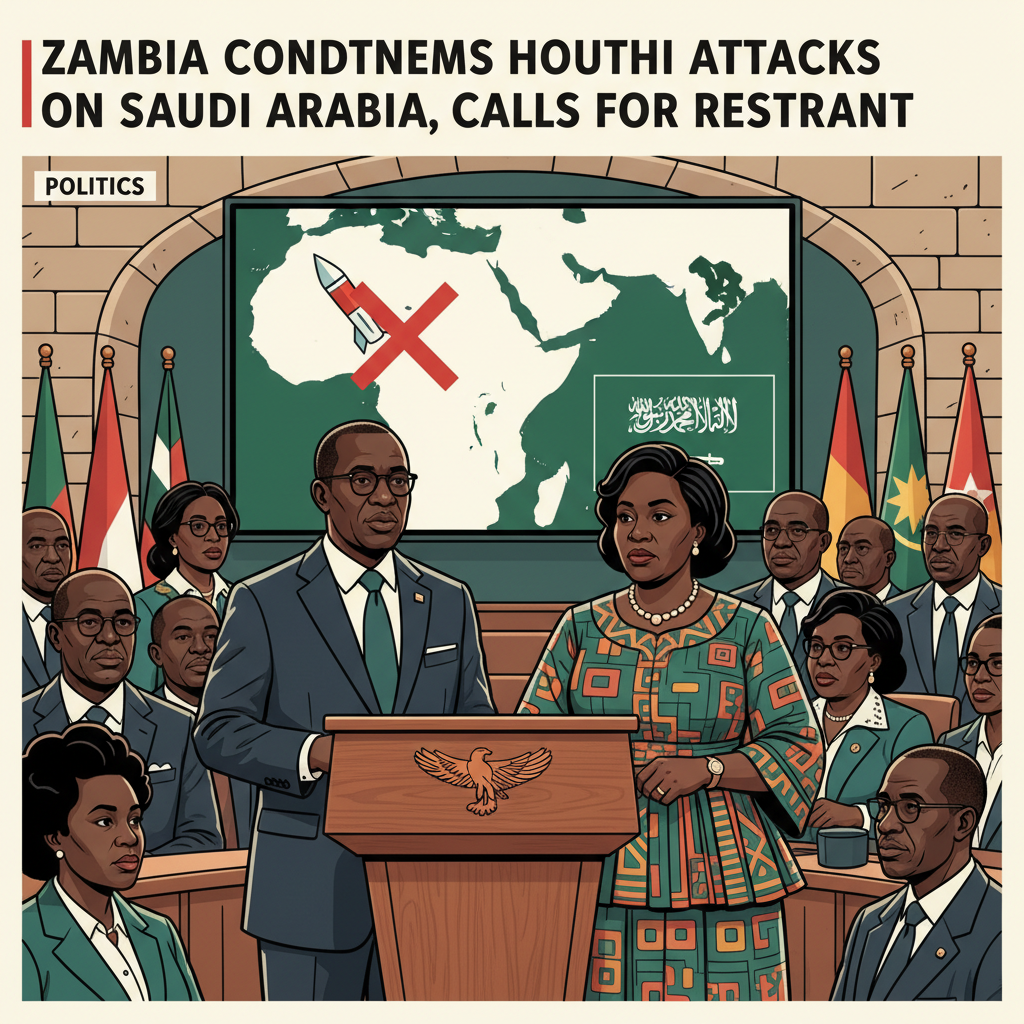
The Zambian Government, through the Ministry of Foreign Affairs and International Cooperation, has issued a strong condemnation of the recent wave of drone and missile attacks launched by Houthi rebels against the Kingdom of Saudi Arabia. The strikes, which notably targeted civilian infrastructure including King Khalid International Airport in Riyadh, have resulted in tragic civilian casualties and widespread international alarm. In its official statement released in Lusaka, the Zambian administration expressed deep concern over the escalating hostilities and called for immediate restraint from all belligerent parties to prevent further destabilisation of the region. Zambia's diplomatic stance underscores its long-standing foreign policy of advocating for peaceful resolutions to international conflicts and upholding the sanctity of civilian life and international humanitarian law. The government reiterated its solidarity with the Kingdom of Saudi Arabia, emphasizing that attacks on civilian aviation hubs and vital infrastructure represent a grave violation of international law and threaten broader global peace and security. Lusaka stressed that dialogue and diplomatic engagement remain the only viable pathways to resolving the protracted conflict in Yemen and restoring stability across the Middle East. The condemnation places Zambia alongside a chorus of international voices, including the United Nations and various global leaders, denouncing the cross-border escalation. For Zambia, maintaining a principled stance on global security matters is vital for preserving the norms of state sovereignty and mutual respect among nations. Analysts note that while Zambia is geographically distant from the conflict theater, disruptions to Middle Eastern security and energy infrastructure can have indirect economic ripple effects, particularly regarding global oil markets and fuel pricing stability domestically. As diplomatic channels work to de-escalate the situation, the Zam