Rail Investment Opens a New Route for Agricultural Growth
BUSINESSBy Ulla Setswalo — Zambian Agribusiness
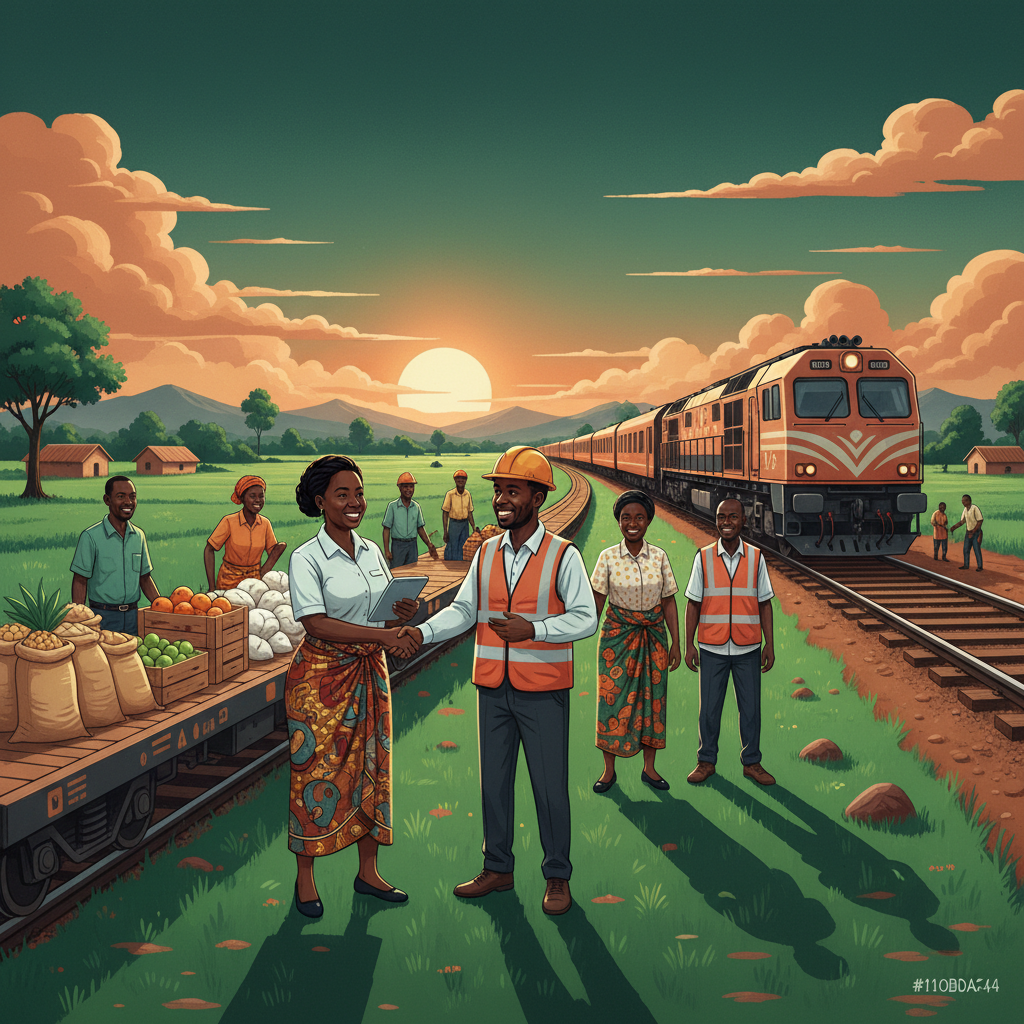
Rising agricultural production will only translate into stronger markets if Zambia can move larger volumes efficiently. With ambitious 2030 production targets for maize, soya beans, sugar, and wheat, expanding rail capacity has become a critical component of the national agribusiness growth equation, shaping how efficiently commodities reach processors, regional markets, and export ports. Finance and National Planning Minister Situmbeko Musokotwane has repeatedly linked the government's aggressive rail revitalization program to soaring outputs across both agriculture and mining, asserting that reliance on road transport alone is unsustainable for projected freight volumes. Underpinning this strategic pivot are major regional logistics projects designed to alleviate transit bottlenecks. The modernization of the Tanzania-Zambia Railway Authority (TAZARA)—bolstered by a public-private partnership concession with the China Civil Engineering Construction Corporation valued at over US$1.4 billion—aims to restore reliable connectivity to the port of Dar es Salaam, complemented by a planned inland port at Kapiri Mposhi. Simultaneously, the development of the Lobito Corridor offers a western trade route linking Zambian production zones through the Democratic Republic of Congo directly to Angola's port of Lobito. Domestically, Zambia Railways Limited (ZRL) is working to overhaul its operational framework. Historically, rail has captured only a fraction of the nation's bulk freight, moving just 804,214 tonnes in 2023—roughly four percent of an estimated 21 million tonnes of total bulk cargo. Constrained by aging infrastructure and limited rolling stock, ZRL has targeted an expansion under its 2024–2028 strategic business plan to lift annual freight volumes to 2.6 million tonnes by the close of 2028. Government injections, backed by multilateral support, are steering the utility away from mere survival and toward competitive commercial operation. The implications for Zambia'