Foreign Ministry warns Ghanaians over fake Zambia job offers
CRIMEBy Zambian Observer — Zambian Observer
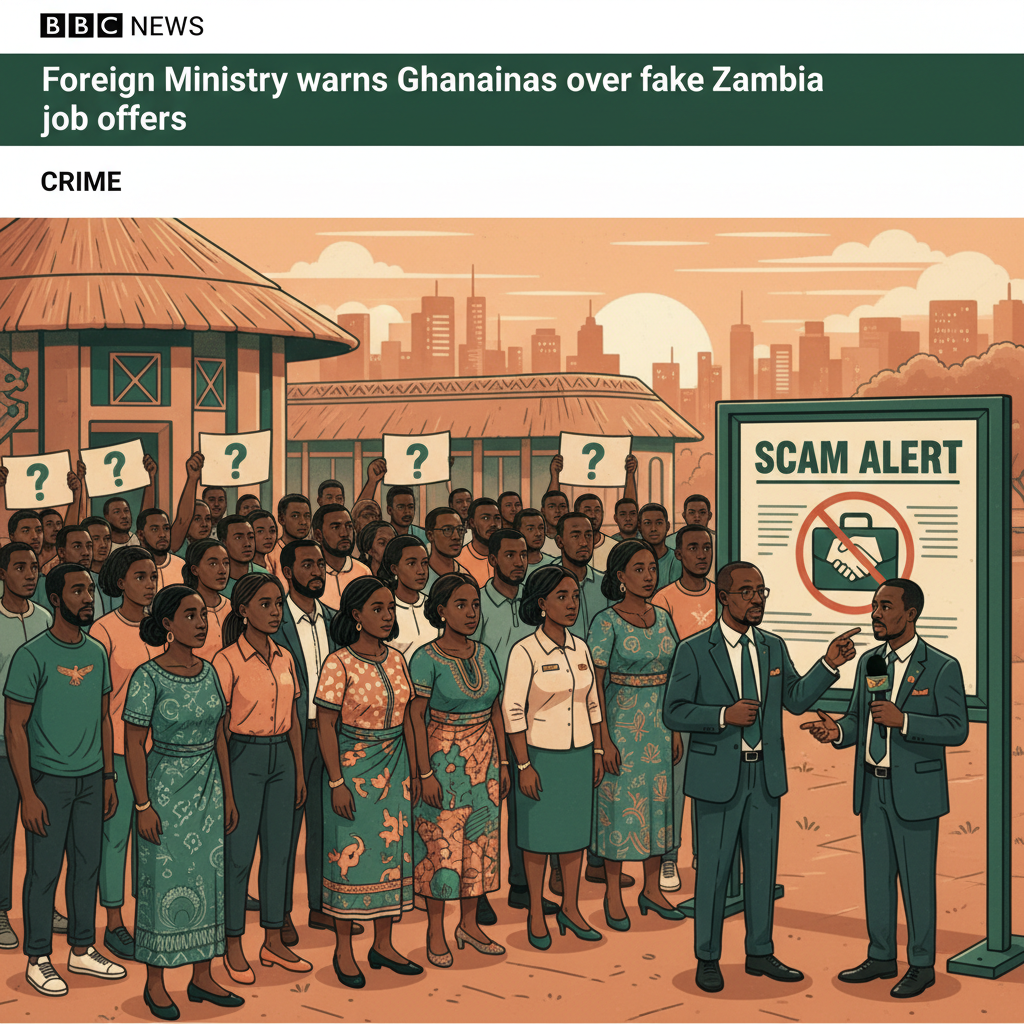
The Ghanaian Ministry of Foreign Affairs has issued a stern travel advisory warning its citizens to exercise extreme caution when evaluating employment opportunities in Zambia. This directive follows a major multi-agency security operation in Lusaka that led to the arrest of dozens of foreign nationals, including six Ghanaians, linked to an international organized cybercrime syndicate. The crackdown, which took place in the upscale New Kasama residential area, exposed a sinister network utilizing deceptive online job postings to lure unsuspecting victims into forced labor and cyber-scam operations. According to details released by the Ghana High Commission in Lusaka, the victims were initially recruited through seemingly legitimate advertisements for online data-entry positions. However, upon arrival in Zambia, their travel documents and passports were systematically confiscated by syndicate operators, stripping them of their freedom of movement. They were subsequently coerced under duress into participating in illicit online scam activities. The operation itself, executed jointly by the Zambia Police Service, the Drug Enforcement Commission (DEC), and the Department of Immigration, netted 79 suspects comprising multiple nationalities, underscoring the transnational nature of these criminal syndicates operating within the region. In response to these alarming disclosures, Ghana's foreign ministry has emphasized the urgent need for rigorous background checks and thorough verification of recruitment agencies before any prospective traveler accepts overseas employment. The advisory serves as a stark reminder of how human trafficking networks continually adapt their recruitment strategies, increasingly leveraging digital platforms and social media to target unemployed or economically vulnerable youth across the African continent. For Zambia, the incident sheds light on the growing challenge of transnational criminal syndicates attempting to establish clandestine oper