HH HAS DONE IT AGAIN – AMERICA BOWED, ZAMBIA SIGNED $1.5 BILLION ON OUR OWN TERMS!
POLITICSBy Mupishi Jones — Zambian Observer
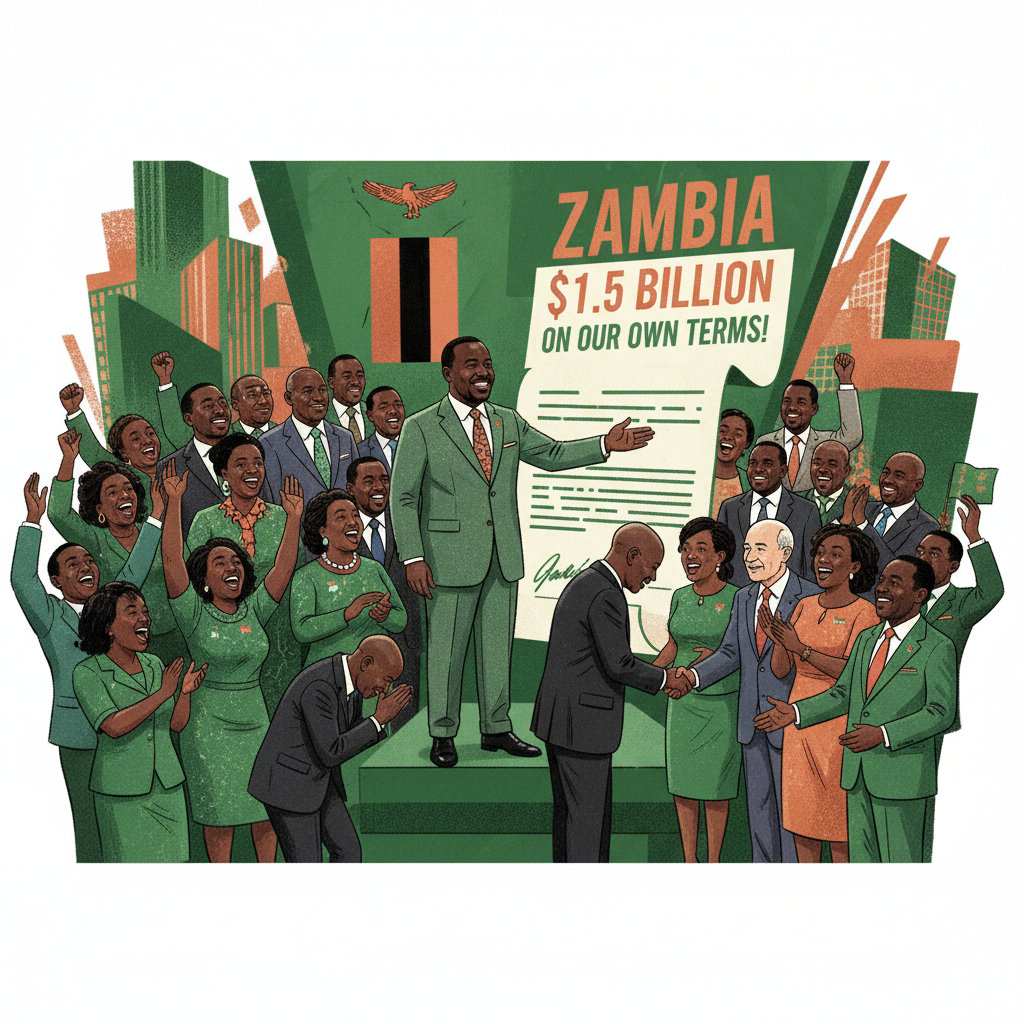
The recent signing of a five-year, $1.5 billion health financing agreement between Zambia and the United States has ignited intense national debate, drawing sharp contrasts between government supporters and opposition critics. Writing in a spirited public commentary, political commentator Mupishi Jones hailed the development as a major diplomatic and administrative victory for President Hakainde Hichilema’s New Dawn administration. According to proponents, the final agreement demonstrates robust leadership by ensuring that foreign aid is accepted strictly on Zambian terms, free from any backroom compromises regarding the country's sovereign mineral wealth or citizens' private medical data. Controversy had swirled around preliminary drafts of the pact earlier in the year, with civil society organizations and opposition figures expressing profound anxiety over provisions concerning data sharing and biological specimens. Critics, including prominent political voices, repeatedly accused the executive branch of yielding to foreign pressures. However, government officials, including Health Minister Prof. Roma Chilengi and Foreign Affairs Minister Mulambo Haimbe, moved to quell public apprehension by clarifying that contentious clauses—particularly those relating to critical minerals and patient data access—were entirely decoupled or removed prior to the official signing ceremony in Lusaka. Jones robustly defended the administration against what he termed politically motivated propaganda, emphasizing that the multi-billion-dollar health injection will be coupled with domestic matching funds to revamp public healthcare infrastructure. Key priorities highlighted under the arrangement include extensive recruitment of frontline and community health workers, as well as sweeping institutional reforms at ZAMMSA to seal leakages and restore international confidence following past pharmaceutical supply scandals. Supporters argue these structural safeguards prove that transparency