SUNDAY CHANDA BACKS GEORGE MTONGA, SAYS GOVERNMENT CANNOT BUY ALL THE MAIZE FROM FARMERS
POLITICSBy Zambian Observer — Zambian Observer
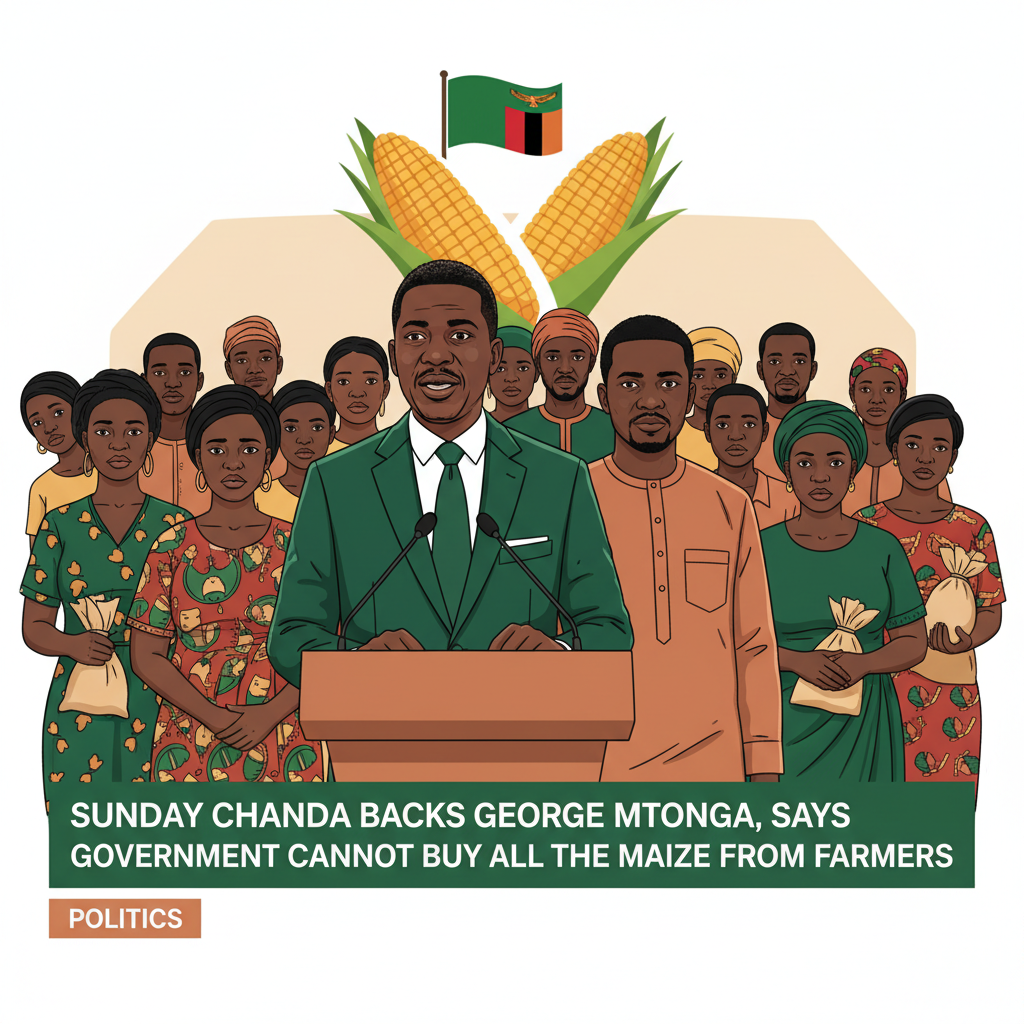
The national discourse surrounding agricultural marketing and state procurement capacities took a fresh turn this week as former Kanchibiya parliamentary candidate Sunday Chanda entered the fray, publicly backing comments made by George Mtonga. The debate centers on the logistical and financial realities facing Zambian small-scale farmers, many of whom look to state-backed institutions for guaranteed markets and timely payments for their harvest. Mr. Chanda emphasized that despite high expectations from farming communities, it is economically unfeasible for the government—through the Food Reserve Agency (FRA) or other administrative bodies—to absorb every single grain of maize produced nationwide. He noted that while government interventions are vital for national food security and price stabilization, structural constraints mean that private sector participation remains an indispensable pillar of a healthy agricultural economy. The remarks come at a sensitive time when farming communities across various provinces have expressed anxiety over delayed payments, procurement caps, and logistical bottlenecks. For years, the debate over whether the state should act as a universal buyer or a strategic buyer of last resort has remained a contentious policy issue. Agricultural economists and political actors alike frequently clash over how to balance state support with free-market principles to prevent the collapse of smallholder farming operations. Critics of the current administration argue that mixed messaging from public officials regarding crop purchases creates false hopes among rural producers, who often invest heavily in inputs only to face restricted market access or prolonged waiting periods for their dues. Conversely, government defenders maintain that fiscal prudence requires setting sustainable purchasing limits to avoid plunging state agencies into unsustainable debt obligations. As the debate continues to unfold across both traditional and digital media p