Govt challenges telecoms to turn connectivity into economic growth
TECHNOLOGYBy Chongo Sampa — News Diggers
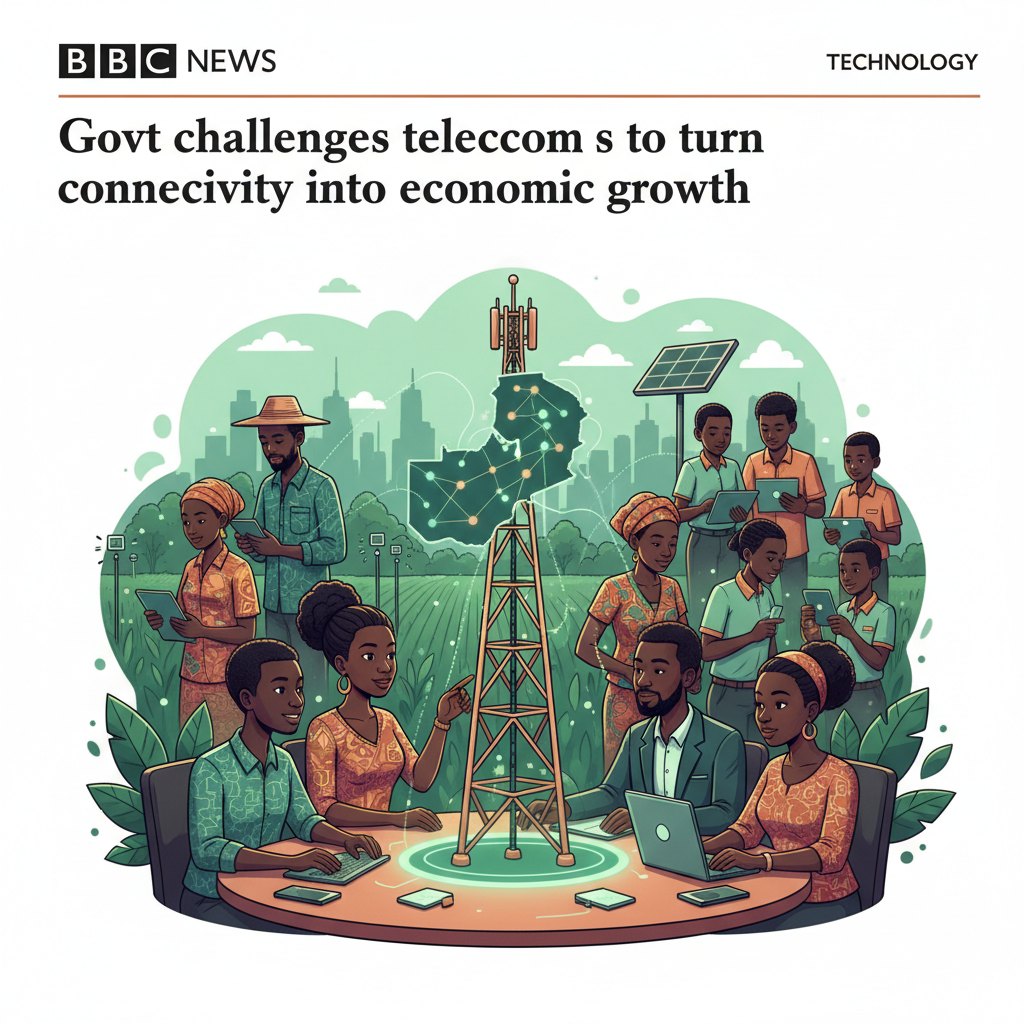
The Zambian government has issued a sharp challenge to the nation's telecommunications sector, urging industry players to move beyond basic network expansion and focus heavily on creating digital products that directly fuel economic growth. Speaking at a major industry event in Lusaka where state-backed operator Zamtel rolled out upgraded digital applications and flexible consumer offerings, Ministry of Technology and Science Permanent Secretary Dr Brilliant Habeenzu stressed that raw network coverage should not be mistaken for true economic integration. He noted that while infrastructural deployment remains vital, the ultimate test for telecom operators lies in whether their services deliver practical economic value, affordability, and accessibility down to the last mile. Dr Habeenzu underscored that the country's rising digital penetration must transcend mere subscription figures to become a catalyst for daily productivity. In an economy striving for broad-based diversification and formalization, affordable data and robust digital platforms are critical to empowering micro, small, and medium enterprises (MSMEs), smallholder farmers, and informal traders. The government's stance reflects an ongoing policy push to ensure that information and communications technology (ICT) serves as a core pillar under national development blueprints, driving efficiency across trade, agriculture, and public service delivery. The challenge comes at a time when Zambia's telecommunications sector is experiencing notable transformation, characterized by expanding fibre infrastructure, rising mobile money adoption, and competitive product diversification by mobile network operators. Regulatory bodies and industry reports have consistently highlighted the sector's robust contribution to national output and employment generation. However, policymakers argue that operators must actively address persistent bottlenecks, including high operational costs, regional digital divides, and the nee