Zambia and Botswana fast-track 430 km MKL rail project
REGIONALBy RailMarket.com
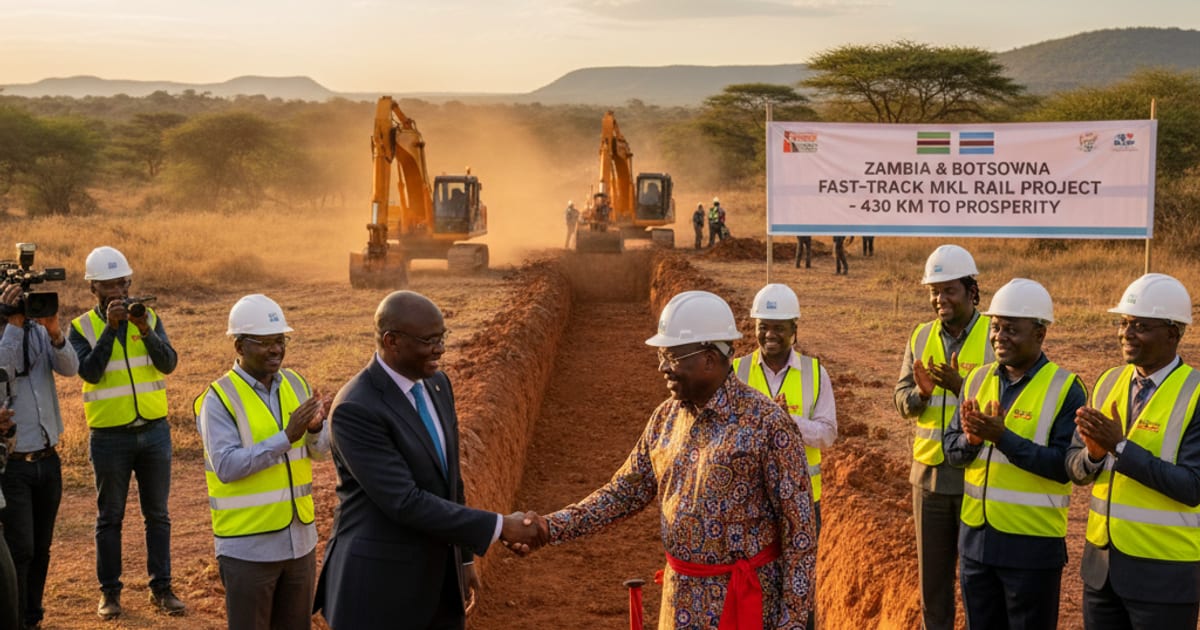
**Lusaka, Zambia** – Zambia and Botswana are jointly accelerating efforts to bring the ambitious Mosetse–Kazungula–Livingstone (MKL) Rail Project to fruition, with a directive for technical teams to complete all requisite studies by the close of 2026. This 430-kilometre railway line represents a critical strategic priority for the Southern African Development Community (SADC), poised to fundamentally reshape regional logistics by transitioning heavy freight from congested road networks to more efficient rail, thereby significantly bolstering the North-South Corridor's integration and capacity. For Zambia, this initiative holds immense promise, offering a vital artery for its burgeoning mining and agricultural sectors to access international markets with greater ease and reduced costs. The MKL project is meticulously designed to leverage existing infrastructure while introducing new linkages. It encompasses a substantial 365-kilometre section within Botswana, stretching from Mosetse to the Kazungula Bridge, and a crucial 65-kilometre segment on the Zambian side, connecting the bridge directly to Livingstone. A cornerstone of this development is the ingenious utilisation of the Kazungula Bridge, a marvel of regional cooperation which already boasts a pre-installed rail deck over the mighty Zambezi River. This forward-thinking design eliminates the need for extensive new construction at the border crossing, underscoring the long-term vision that underpins regional infrastructure planning and offering a tangible symbol of cross-border collaboration. The primary impetus behind the MKL project is the establishment of a more efficient and resilient logistics route for Zambia's vital exports, particularly copper, cobalt, and agricultural produce. Currently, a significant portion of this cargo relies heavily on road haulage through the Kazungula border, leading to frequent delays, increased wear and tear on roads, higher operational costs, and a substantial carbon footprin