Power disturbance at Levy Mwanawasa Stadium lasted just 0.2 seconds, but the stadium’s floodlights require up to 20 minutes to return to full brightness after a power outage – ZESCO
SPORTSBy Zambian Observer — Zambian Observer
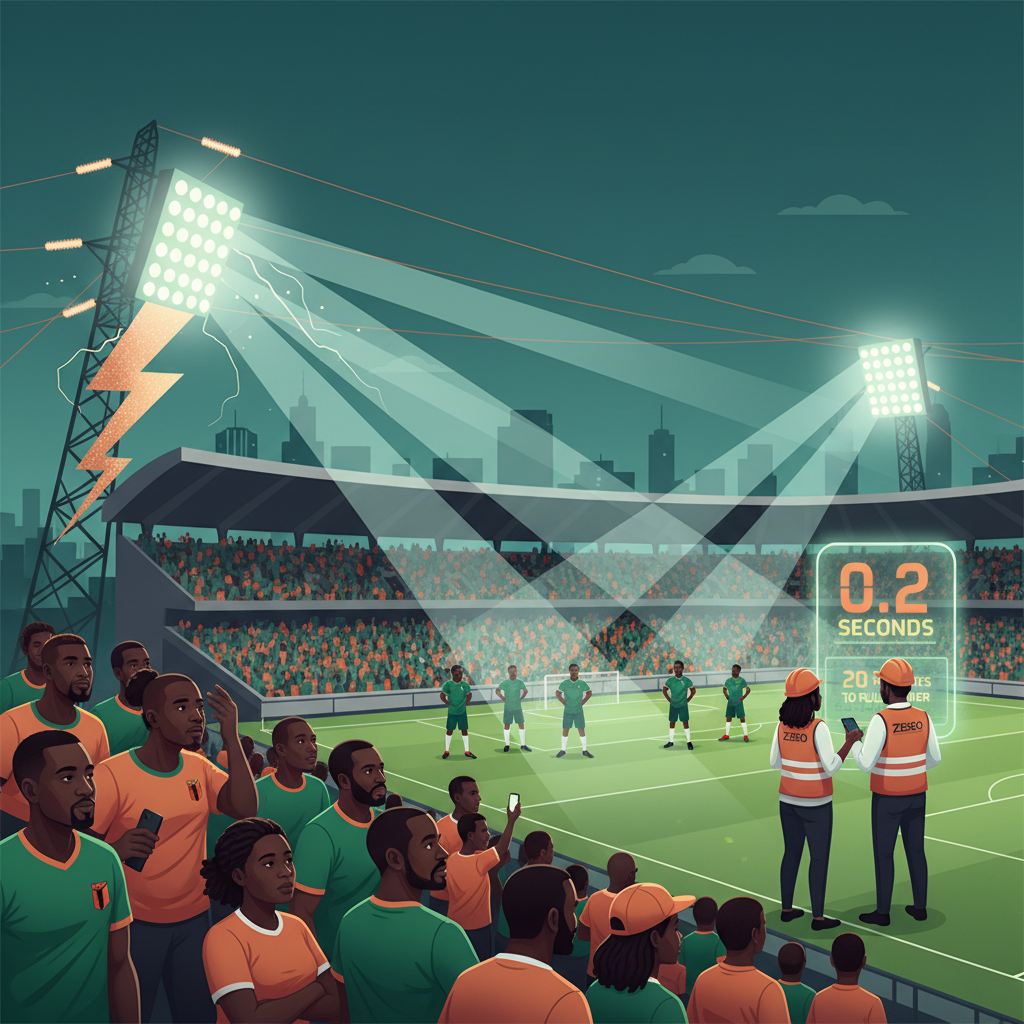
The recent power disruption that temporarily halted international football action at the Levy Mwanawasa Stadium has triggered a national conversation regarding sports infrastructure resilience and power utility performance. According to an official statement released by the Zambia Electricity Supply Corporation (ZESCO), the actual power fluctuation on the grid lasted an imperceptible 0.2 seconds. Yet, this micro-interruption was enough to plunge sections of the stadium into darkness, disrupting proceedings and raising eyebrows among thousands of passionate fans filling the stands. While critics were quick to point fingers at the national power grid given historical generation challenges, technical experts have shifted the spotlight toward the stadium's internal electrical architecture. ZESCO explained that modern high-intensity discharge floodlights utilized in major sporting arenas require specialized ignition cycles. When power is interrupted even for a fraction of a second, the high-pressure metal halide lamps automatically shut off as a safety precaution. Once extinguished, these bulbs require a cooling-off period before they can be safely struck again, followed by a protracted warm-up phase that can stretch up to 20 minutes to achieve full luminosity. This technical reality highlights a critical vulnerability in Zambia's premier sporting facilities. Levy Mwanawasa Stadium, situated on the Copperbelt, stands as one of the country's flagship venues certified to host Confederation of African Football (CAF) and FIFA-sanctioned matches. Stakeholders in the sports sector have increasingly argued that relying solely on the primary municipal grid without robust, automated uninterrupted power supply (UPS) systems or high-capacity backup generators capable of immediate seamless transfer leaves major fixtures prone to embarrassing delays. The incident has consequently renewed calls for the Ministry of Sports and stadium management authorities to invest heavily in moder