China Expands Agricultural Skills Transfer to Zambia
BUSINESSBy Zambian Agribusiness — Zambian Agribusiness
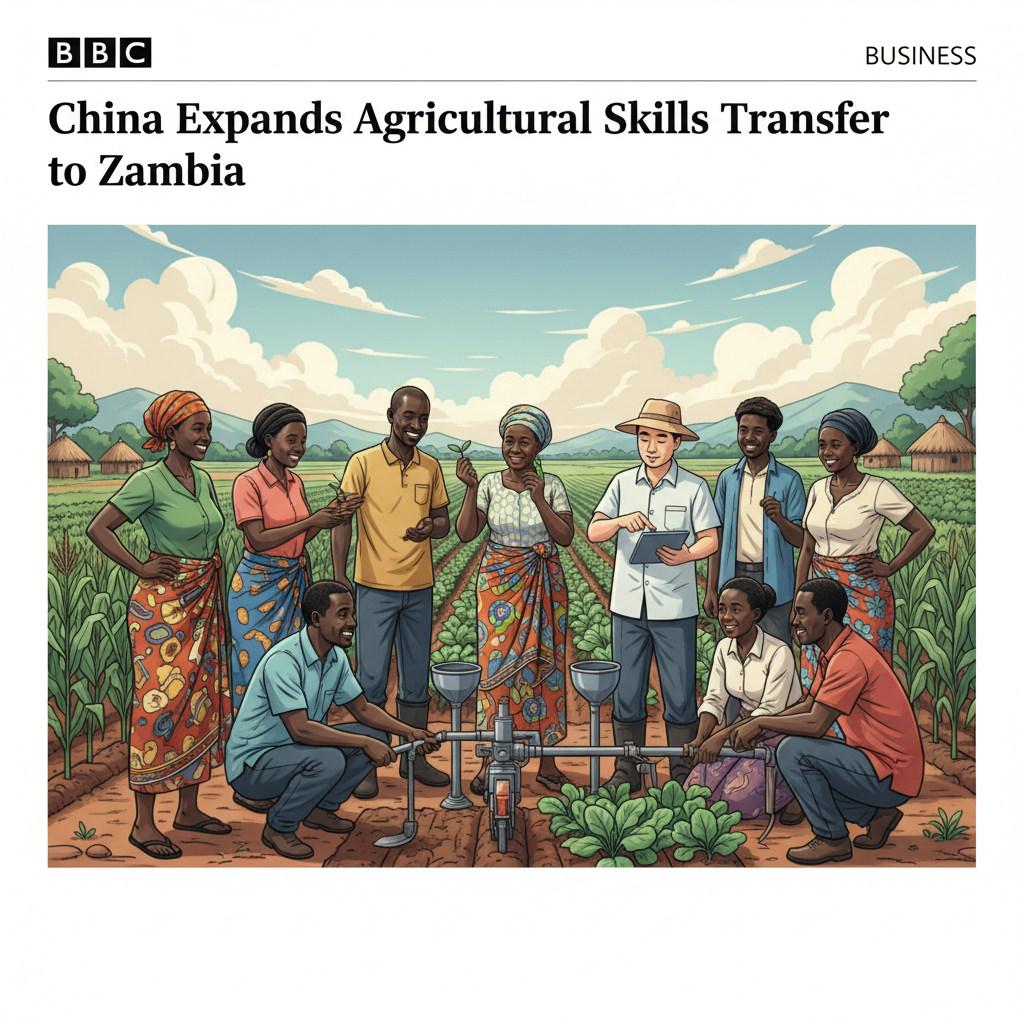
Modern farm machinery holds the potential to radically transform agricultural productivity across Zambia, but the true value of such capital investment ultimately depends upon the human capacity to operate, maintain, and adapt it. This critical link between technology and technical know-how took center stage in Lusaka as the country stepped up efforts to expand technical capabilities in agricultural mechanization through a collaborative, China-supported training initiative. The program has brought together 40 officials and technicians drawn from the Ministry of Agriculture and the Ministry of Fisheries and Livestock for an intensive curriculum focused on advanced agricultural machinery and cutting-edge operational frameworks. Organized by CAMCO College—a subsidiary of the CAMCO Group—in close collaboration with the Chinese Academy of Agricultural Mechanization Sciences (CAAMS), the training forms an integral part of ongoing bilateral technical cooperation. Participating technicians are being exposed to a broad spectrum of modern innovations designed to maximize efficiency, including high-efficiency irrigation systems, conservation tillage methodologies, new energy applications in farming, and advanced post-harvest technologies. Officials emphasize that while acquiring heavy machinery remains an important milestone, cultivating local expertise to service and manage the equipment is paramount to ensuring lasting economic returns on agrarian investments. Speaking at the launch event, Chinese Embassy Counsellor Jin Jun noted that the program directly aligns with consensus agreements reached by the two heads of state and builds upon the framework established during the Forum on China-Africa Cooperation (FOCAC). Highlighting broader human resource developments, the counselor pointed out that nearly 400 Zambians participated in various bilateral and multilateral training programs supported by China, reflecting a sustained commitment to institutional skills transfer. Pe