Govt. launches of Transformative Sustainable Food Systems programme
ENVIRONMENTBy Lusaka Times — Lusaka Times
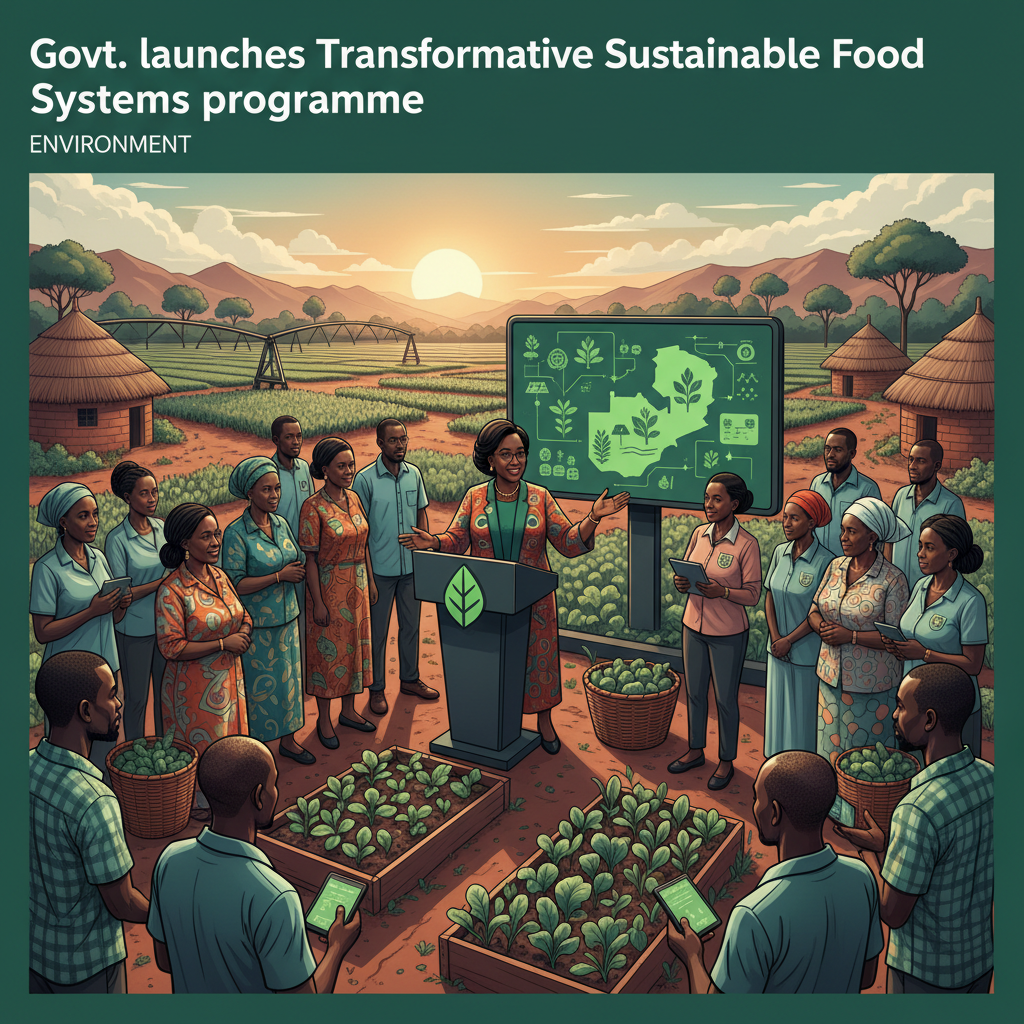
The Zambian government has issued a firm call for stronger, more synchronized coordination among various sectors and public institutions as the country steps up its efforts to address critical food security and nutrition challenges. Speaking on the importance of an integrated approach, senior government representatives stressed that mitigating the impacts of climate shocks and safeguarding national nutritional standards require a unified response extending well beyond traditional agricultural frameworks. In recent policy engagements, officials underscored that sustainable food systems governance is a fundamental pillar of national development. With recurring climate vulnerabilities continuing to exert pressure on agrarian communities and household food baskets, the administration is prioritizing holistic strategies that encompass the entire agricultural value chain—from primary production and post-harvest management to distribution and consumption. This whole-of-government approach seeks to align institutional mandates, optimize resource allocation, and enhance synergy among ministries, local authorities, and development partners. Furthermore, the government's renewed push aligns closely with national development blueprints and international commitments aimed at eradicating hunger and malnutrition. Stakeholders have noted that while Zambia possesses significant agricultural potential, realizing long-term food sovereignty demands robust institutional mechanisms capable of translating policy into tangible community-level outcomes. Initiatives focusing on enhanced extension services, climate-smart farming techniques, and strengthened social protection systems are critical components of this broader developmental thrust. As implementation frameworks roll out across provinces, authorities are urging private sector players, civil society organizations, and local communities to actively participate in building a more resilient food economy. Ensuring that smallholder far