Growth That Reaches the Household: KCM’s Investment in Communities
BUSINESSBy Mwebantu — Mwebantu
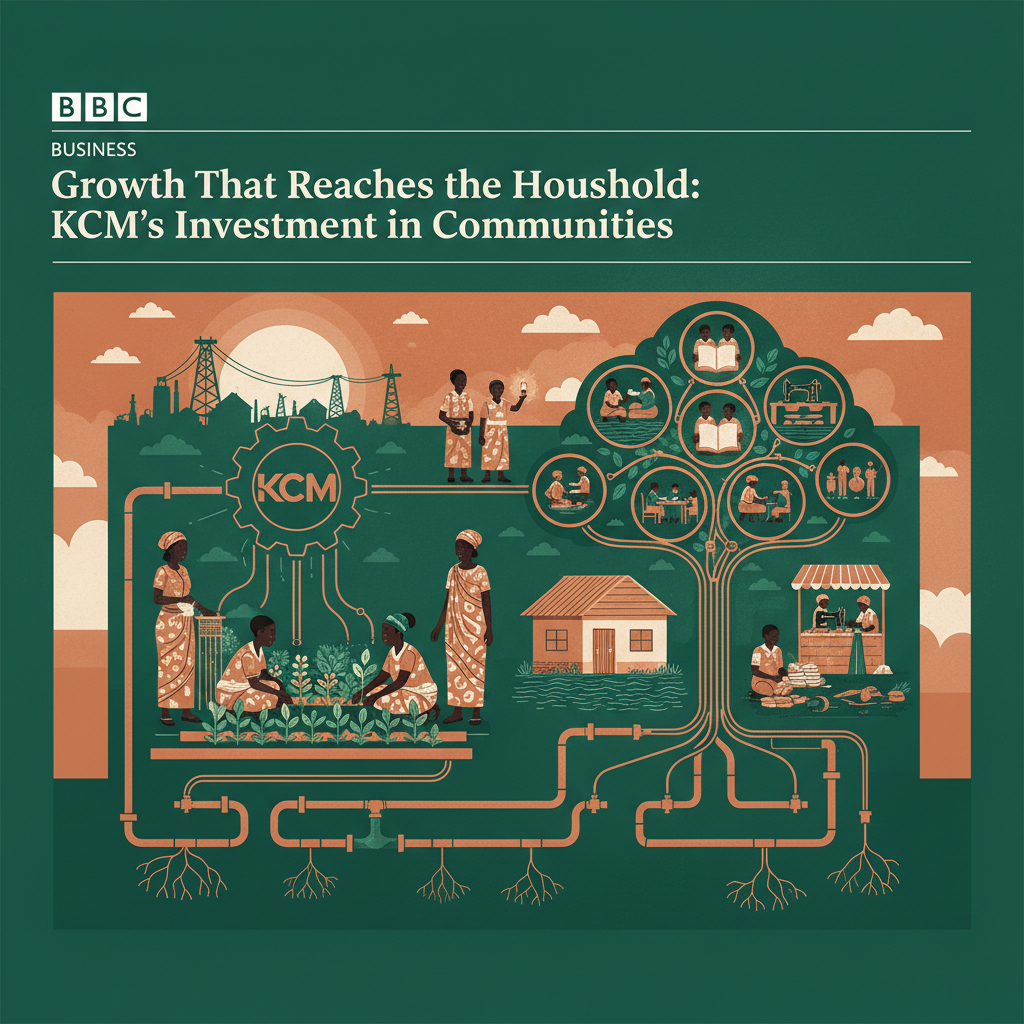
President Hakainde Hichilema has repeatedly maintained that macroeconomic indicators and national production statistics hold little value unless they translate into tangible improvements at the household level. In mining towns across the Copperbelt, where the pulse of the nation's economy is traditionally felt most acutely, this philosophy is increasingly being put to the test. At Konkola Copper Mines (KCM), corporate strategy is undergoing a deliberate shift to ensure that capital allocation reaches beyond extraction tunnels and directly into surrounding communities. Following the complex restructuring and resolution of ownership disputes surrounding KCM, the firm's renewed operational framework has placed a heavy emphasis on localized social investments. Local stakeholders and civic leaders have long argued that previous generations of mining wealth largely bypassed the very neighborhoods bearing the environmental and social costs of extraction. By aligning corporate spending with the national agenda championed by the New Dawn administration, mining corporations are being nudged to prioritize grassroots infrastructure, health services, and educational support. This localized investment model aims to bridge the historical gap between corporate balance sheets and community welfare. In regions like Chililabombwe and Chingola, targeted community funding is designed to revitalize public amenities, support local micro-economies, and provide sustainable community-level assets. Observers note that rebuilding trust between mining houses and local populations requires more than just high production targets; it demands visible, accountable corporate citizenship that responds to everyday challenges. As Zambia strides toward ambitious national copper output targets, the pressure remains on corporate giants to demonstrate that heightened production runs parallel with social responsibility. The government's stance serves as both a policy guideline and a strict metric for acco