Zimbabwean Journalist Hopewell Chinono Schools Zambians On Passports
POLITICSBy Zambian Observer — Zambian Observer
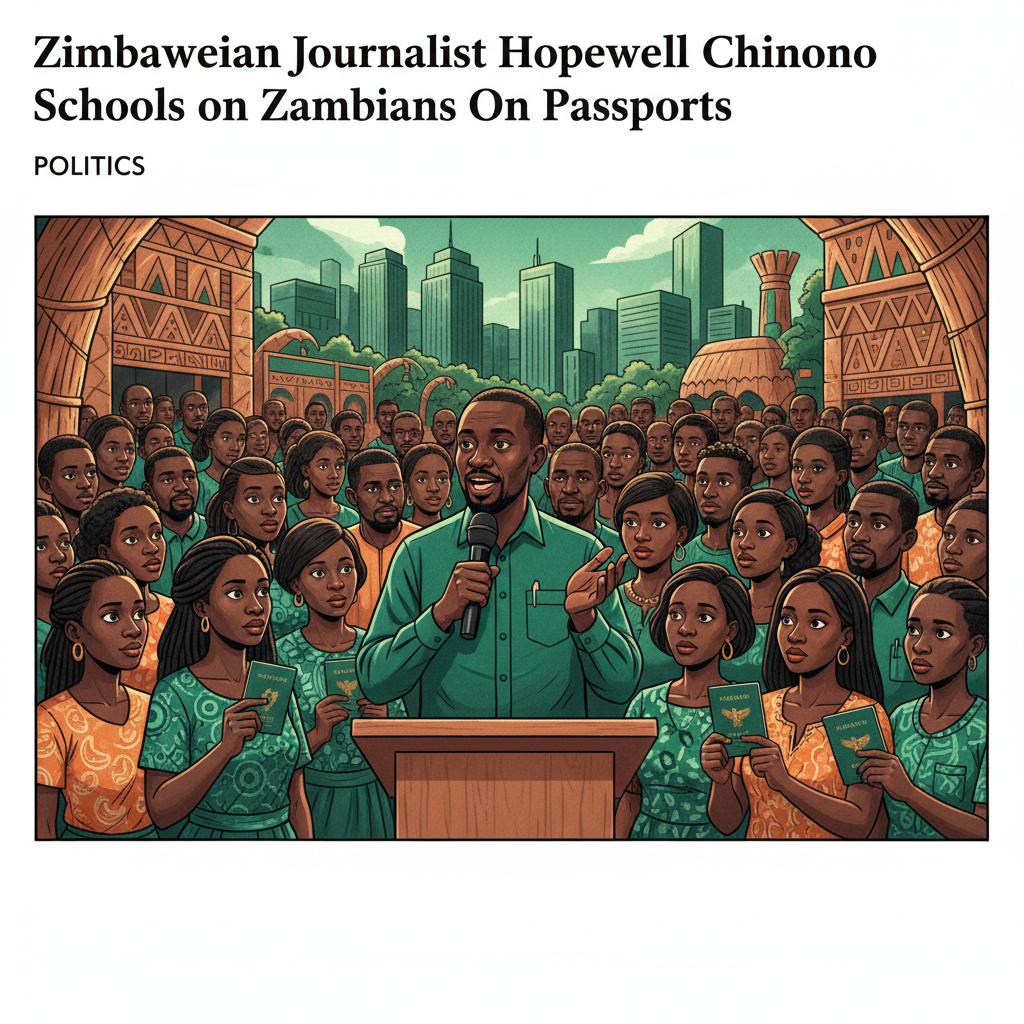
Prominent Zimbabwean investigative journalist Hopewell Chin'ono has sparked an intense regional debate after taking to social media to rebuke certain Zambian commentators who claim that acquiring and retaining a passport is a political privilege rather than a fundamental human right. Chin'ono's remarks arrive in the wake of a controversial decision by the Zambian government to revoke the passports of several prominent critics, opposition figures, and academics, including prominent scholar Dr. Sishuwa Sishuwa. The government gazette issued by the Department of National Registration, Passport and Citizenship cited unspecified national security concerns for nullifying the travel documents. Chin'ono, who has frequently faced state persecution in Zimbabwe for his own investigative reporting, argued that treating travel documents as discretionary favors distributed by the ruling elite mirrors the authoritarian tactics seen elsewhere on the continent. He emphasized that a passport remains a citizen's legal gateway to freedom of movement, professional mobility, and global engagement. According to the veteran journalist, normalizing the administrative withdrawal of travel documents to silence political dissent sets a dangerous precedent for Zambia's democratic trajectory. The comments have polarized digital spaces within Zambia, unearthing sharp divisions among citizens. While civil liberties advocates and opposition sympathizers have echoed Chin'ono's warnings, pointing to what they describe as a shrinking civic space under President Hakainde Hichilema's administration, a significant segment of the online population has defended the state's actions. Supporters of the ruling administration argue that the government must take decisive action against individuals whose public utterances and online activities are perceived as threatening national stability or security. Legal experts and human rights defenders have similarly weighed in, questioning the legal framework and tran