NRPUP BEGINS CANDIDATE SELECTION AFTER ALLOCATION OF 27 PROPORTIONAL REPRESENTATION SEATS
POLITICSBy Nelson Zulu — Zambian Observer
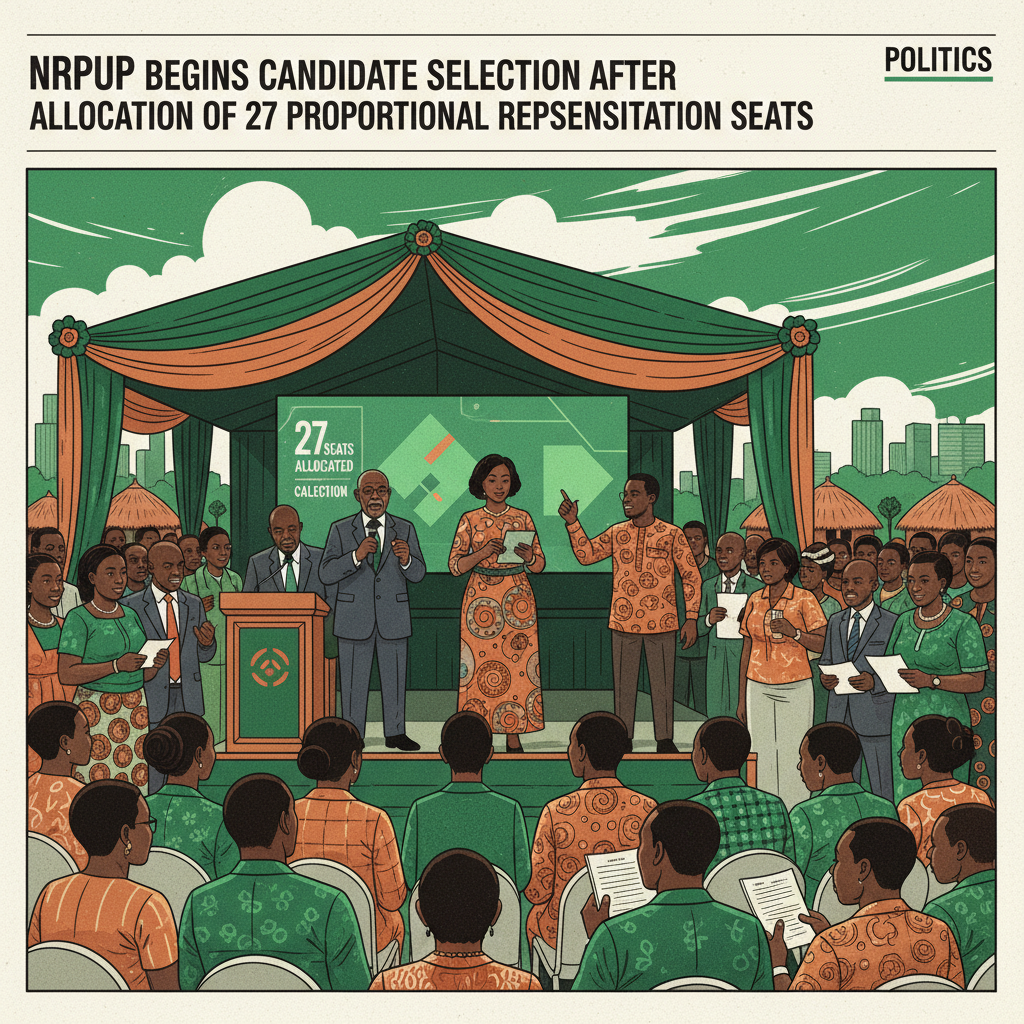
The opposition National Reconciliation Party for Unity and Prosperity (NRPUP) has officially commenced its candidate selection process following the recent allocation of 27 proportional representation seats. The move marks a strategic step for the party as it consolidates its legislative standing following the hotly contested August 2026 general elections, where the political grouping established itself as a formidable force in the Zambian Parliament. Party structures across various provinces have been activated to oversee a transparent and rigorous vetting procedure. According to internal guidelines, the selection of candidates for the proportional representation slots will prioritize gender balance, youth representation, and regional inclusion, aligning with the party's core constitutional values. Senior party officials have emphasized that the criteria are designed to reward dedicated grassroots mobilization while bringing experienced technocrats into the House to provide robust oversight. The allocation of the 27 seats represents a critical component of Zambia's electoral architecture, offering parties an avenue to balance demographic representation within the legislature. For the NRPUP, securing these positions enhances its parliamentary clout, enabling it to shape legislative agendas and anchor opposition discourse effectively. Analysts note that the party's internal dynamics will face scrutiny as leadership balances factional interests stemming from its pre-election alliance formations. As the selection panels begin their sittings in Lusaka, prospective candidates have intensified lobbying efforts. Party leadership has urged calm and adherence to internal democratic tenets, warning against transactional politics that could undermine public trust. The final list of candidates is expected to be gazetted ahead of the commencement of parliamentary business, setting the stage for an active legislative session. The unfolding process underscores the evolving na