AIPAC BACKS GOVERNMENT’S DECISION TO REVOKE PASSPORTS OF SIX ZAMBIANS
POLITICSBy Zambian Observer — Zambian Observer
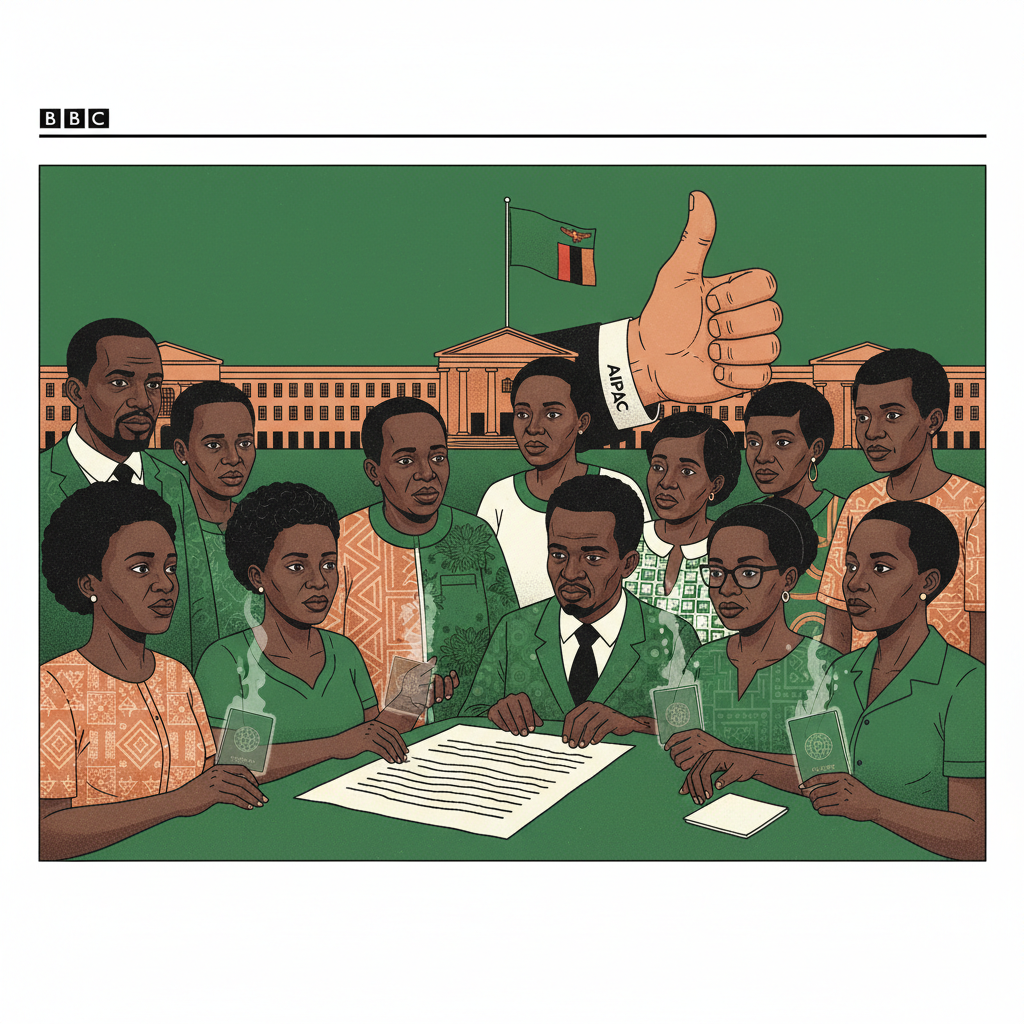
The Zambian government's recent decision to revoke the passports of six high-profile citizens has ignited fierce debate across the political spectrum, drawing sharp commentary from policy institutions and civil society organizations alike. The unprecedented administrative action, published via government gazette notice, targets several prominent critics of the administration, including former diplomats, opposition-linked figures, former members of parliament, and outspoken academics. State authorities have defended the measure by invoking national security grounds, insisting that the exercise of executive powers in matters of travel documents and citizenship aligns with the broader mandate of protecting the state's internal stability. Proponents of the government's action argue that the state must retain robust mechanisms to address individuals whose actions or external engagements are deemed to pose a threat to national security. In environments where political polarization runs high, supporters of the ruling administration maintain that administrative tools such as passport cancellations serve as a necessary deterrent against activities that undermine public order or damage the country's diplomatic standing. From this perspective, the sovereignty of the state and the preservation of internal security take precedence over individual travel privileges, particularly when targeted individuals are perceived to be engaging in destabilizing rhetoric or uncoordinated foreign maneuvers. Conversely, human rights groups and governance watchdogs have strongly condemned the directive, labeling it an authoritarian overreach that weaponizes state documentation to silence dissent. Critics point out that under Zambian law and international human rights frameworks, such as the International Covenant on Civil and Political Rights, freedom of movement is a fundamental entitlement that should not be arbitrarily curtailed. Legal minds have questioned whether the broad invocation of n