SUPER EL NIÑO THREATENS ZAMBIA AS EXPERTS URGE EARLY PREPARATIONS
ENVIRONMENTBy Zambian Observer — Zambian Observer
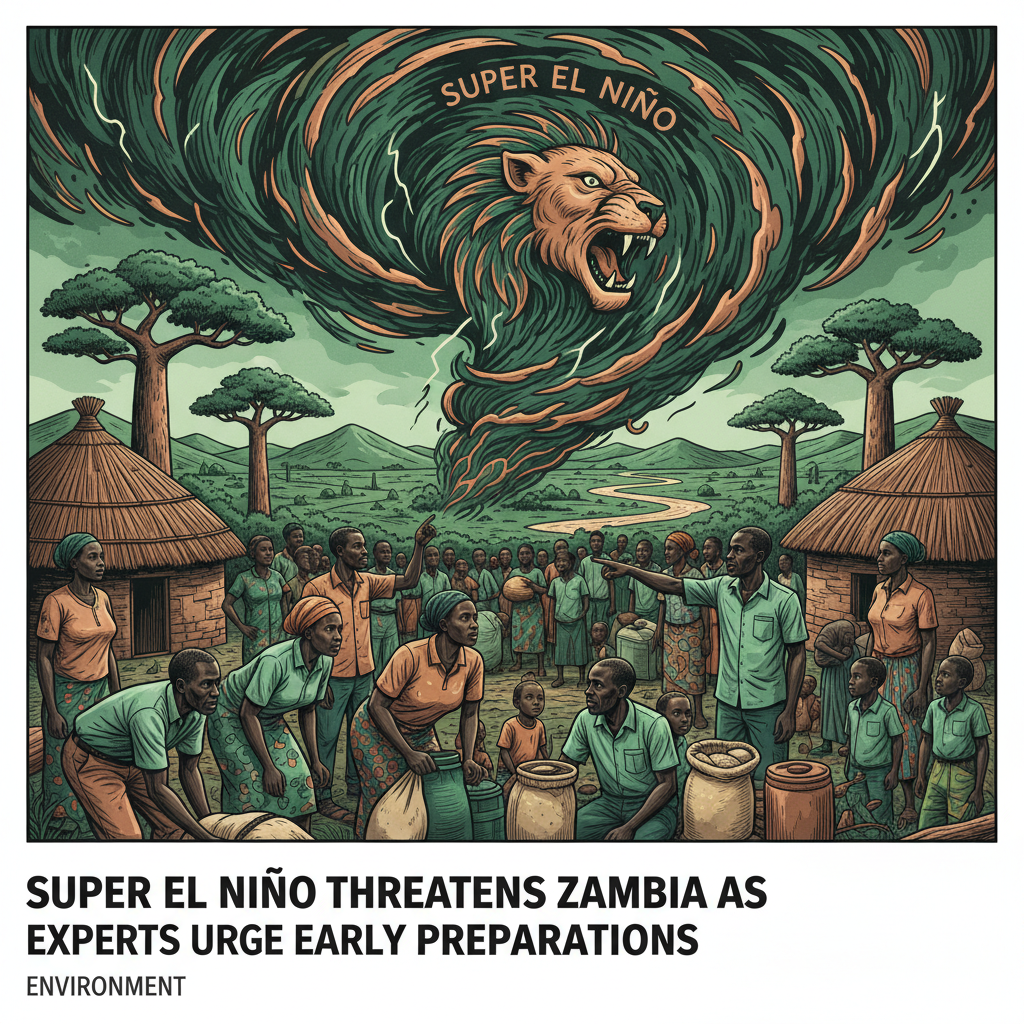
As Zambia continues to navigate the long-term economic and ecological aftermath of previous climate shocks, environmental experts have issued an urgent warning regarding a projected 'super El Niño' weather phenomenon. Scientific models indicate that the tropical Pacific weather pattern could trigger prolonged dry spells and below-average rainfall across southern Africa from October 2026 through March 2027. Analysts stress that climate-sensitive sectors such as agriculture, energy, and tourism must immediately treat the looming weather anomaly as a national emergency rather than a distant risk. The agricultural sector, which remains the backbone of rural livelihoods and food security, faces immense vulnerability. More than two million smallholder farmers, who form the core of national food production, are directly in the line of fire. Although the country recently celebrated a historic rebound in maize production following earlier droughts, experts warn that subsequent gains are fragile. Agricultural authorities are being urged to promote early-maturing crop varieties, drought-resistant small grains like sorghum and millet, and expanded irrigation frameworks to forestall widespread harvest failures and subsequent food price inflation. Simultaneously, the nation's energy grid remains heavily exposed. With over 80 percent of Zambia's electricity generated via hydroelectric installations—most notably at the Kariba complex—recurrent dry spells severely deplete water reservoirs and trigger extensive load shedding. Analysts emphasize that maintaining momentum in renewable energy investments, particularly utility-scale and decentralized solar projects, is non-negotiable if industrial operations, domestic consumers, and the critical mining sector are to be shielded from crippling power deficits. Calls for a coordinated national response have grown louder, with civil society organizations and development experts advocating for enhanced early warning systems and anticipator