EU Election Observation Mission donates equipment, materials
INSTITUTIONSBy Lusaka Times — Lusaka Times
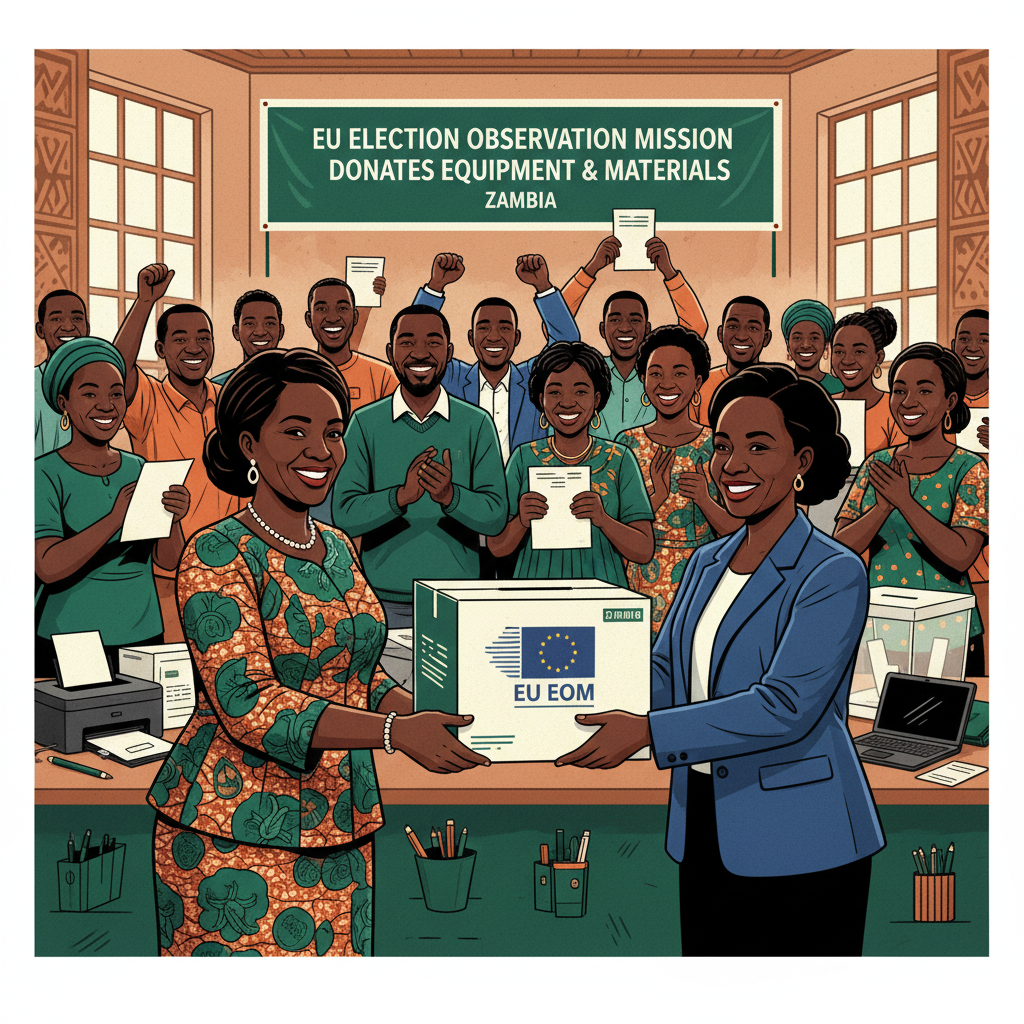
The European Union Election Observation Mission (EU EOM) in Zambia has reinforced its commitment to local civic empowerment by handing over equipment and materials worth approximately 4.9 million Kwacha to selected community-based organisations. The distribution is designed to assist grassroots entities that play an integral role in community development, civic education, and participatory governance across the country. This substantial material support follows the conclusion of intensive electoral observation activities deployed by the EU during Zambia's general elections. Beyond monitoring polling stations and assessing the general electoral environment, international observation missions frequently seek to leave a positive institutional footprint by reallocating logistical assets, office machinery, and operational equipment to domestic civil society networks that continue vital grassroots work long after international observers depart. Civil society organisations in Zambia have historically served as critical partners in bridging the gap between marginalized communities and national governance structures. By receiving assets such as IT equipment, communication tools, and logistical supplies, the beneficiary organizations are better equipped to sustain their outreach, advocate for transparency, and foster civic participation at the local level. Representatives from the recipient groups noted that resource constraints often hamper grassroots initiatives, making such targeted donations invaluable to their day-to-day operations. Stakeholders across the political and social spectrum have often emphasized the need to strengthen local capacities to ensure that democratic gains extend beyond electoral cycles. The timing of the handover highlights a concerted effort to transition from short-term electoral observation support to long-term developmental empowerment. Analysts point out that equipping local actors directly contributes to enhancing public accountability and