BILL 7 HAS GIVEN A SEAT TO THE OPPOSITION IN CHOMA, IN UPND STRONGHOLD
POLITICSBy Zambian Observer — Zambian Observer
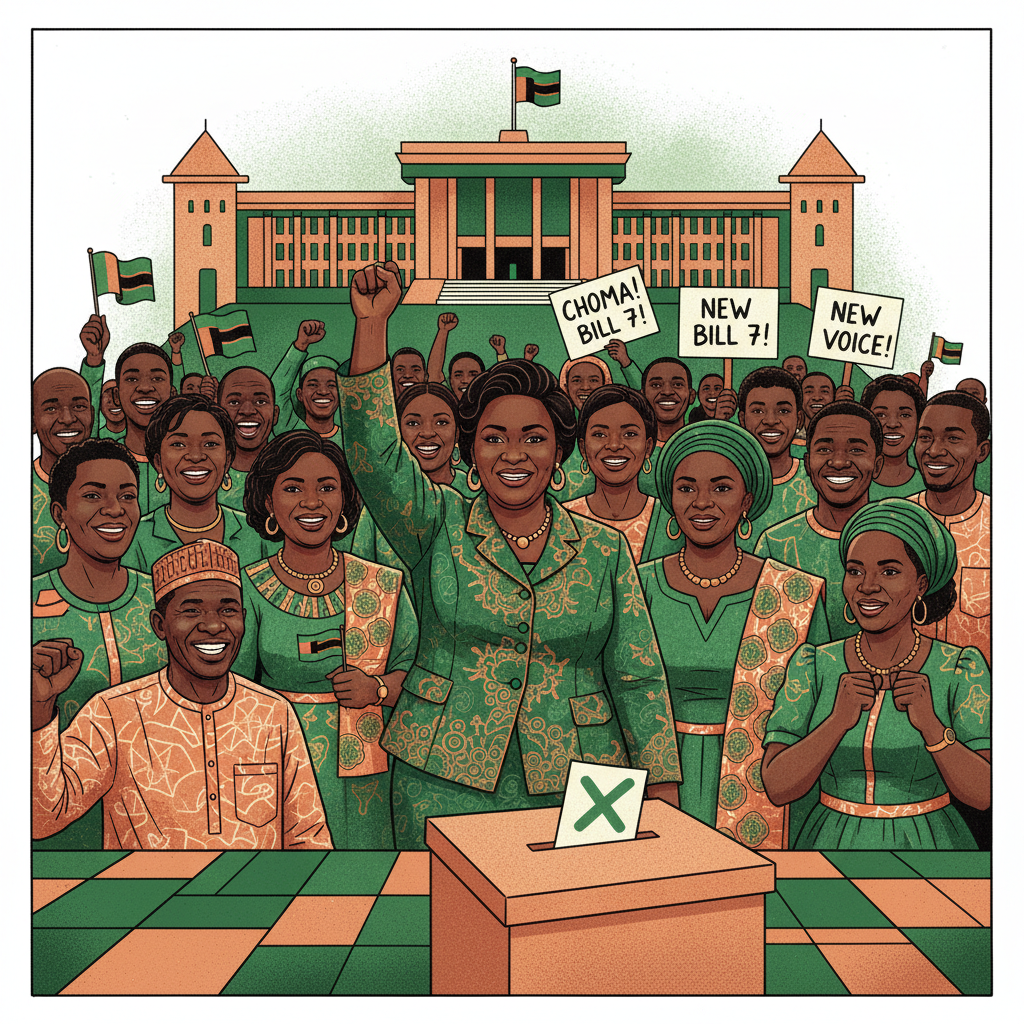
The political landscape in the Southern Province and across Zambia continues to react to the structural shifts introduced by Constitution Amendment Bill No. 7. Commentators and civic analysts have pointed out that one of the most intriguing outcomes of the legislative changes is the potential reconfiguration of representation in areas historically known as strongholds for the ruling United Party for National Development (UPND). Specifically, regions like Choma may see broader political dynamics as new electoral pathways take effect. Bill No. 7, which addresses extensive modifications to the country's electoral framework, introduces provisions for expanding constituencies and incorporating proportional representation seats. Proponents argue that these changes are designed to make Parliament more reflective of the diverse demographics of the nation, providing space for women, youth, and persons with disabilities. However, it is the geographic distribution of these seats that has sparked intense debate among political observers regarding how traditional strongholds will manage internal political competition. In constituencies like Choma, where the ruling party has historically enjoyed overwhelming dominance, the inclusion of alternative representative slots opens the door for opposition figures and minority factions to secure a foothold. Analysts suggest that this mechanism could transform deeply monolithic regional voting patterns into more competitive local political ecosystems. Rather than locking out minority perspectives, the system encourages a broader coalition of voices within the national assembly. At the same time, public reaction to the legislation remains mixed. While some view the reforms as a progressive step toward inclusive governance and unity, critics have continuously raised concerns regarding the speed of enactment and the broader implications for direct democratic accountability. Civil society organizations and various political actors have freq