Early rains reach parts of Zambia as farmers race to protect maize
ENVIRONMENTBy Zambian Observer — Zambian Observer
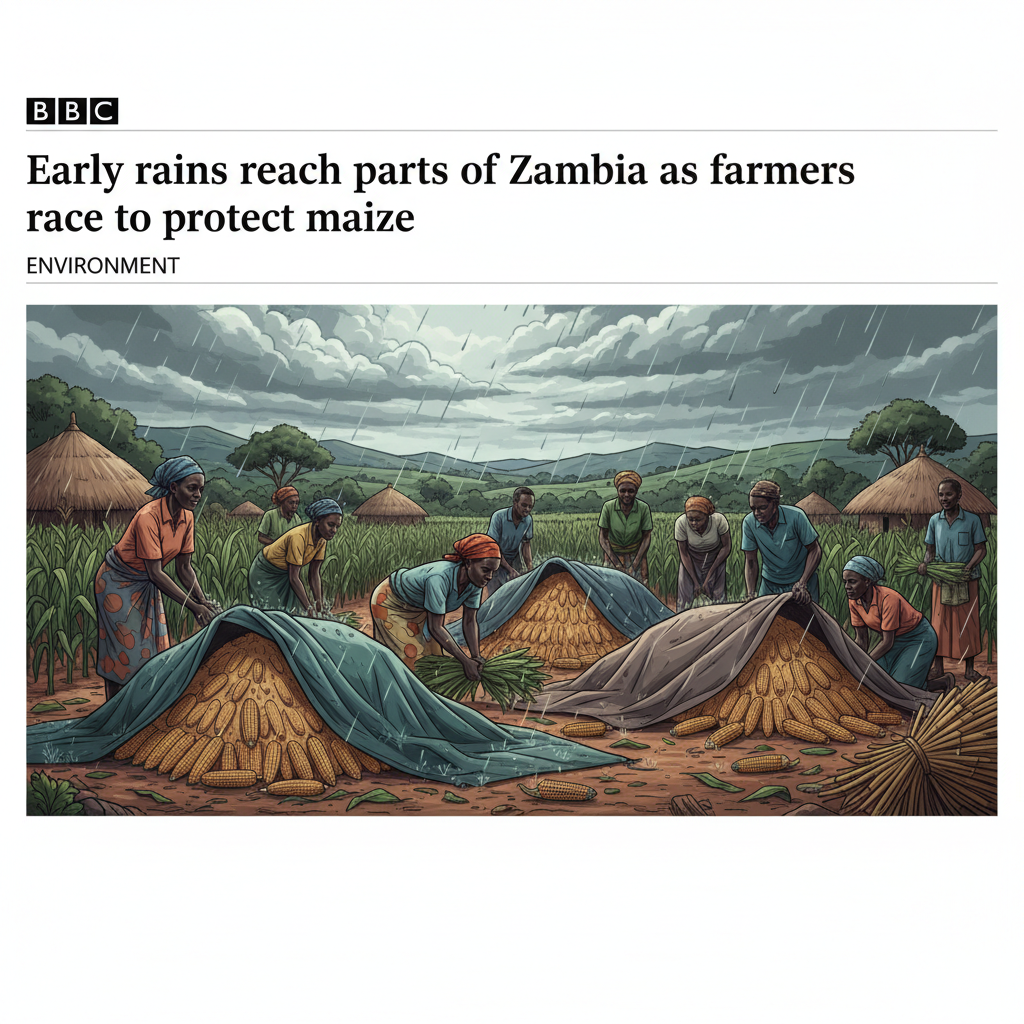
The arrival of unexpected light rains in parts of Lusaka and outlying agricultural districts has sent a wave of anxiety through Zambia's farming communities. While precipitation is typically welcomed ahead of the traditional planting season, these early showers threaten grain already harvested and left out to dry. Farmers across several provinces are scrambling to cover vulnerable stocks, fearing that excess moisture could degrade crop quality and trigger severe post-harvest losses. The unseasonal weather comes at a sensitive time for the country's agricultural sector, which has been working hard to consolidate gains following previous climate-induced shocks. Agricultural extension officers have stepped up advisories, urging smallholder and commercial farmers alike to secure tarpaulins and optimize storage conditions. High moisture content remains a primary enemy for grain stored in open depots, directly impacting marketability and stoking fears over potential rejections by major buyers. Government agencies and agricultural bodies are monitoring the weather patterns closely as discussions continue over strategic grain reserves and floor prices. The Food Reserve Agency (FRA) faces mounting pressure from farming unions to accelerate procurement processes before erratic weather compounds the logistical hurdles already facing producers. Ensuring that dry maize is safely locked away is vital to maintaining the stability of the national food supply chain and protecting household incomes. Beyond immediate tactical measures, the surprise downpours underscore the growing unpredictability of weather patterns across Southern Africa. Climate change has increasingly disrupted traditional seasonal rhythms, making advanced meteorological forecasting and resilient infrastructure absolute necessities for Zambia's food security. Experts continue to advocate for expanded storage facilities equipped with proper drying technologies to cushion farmers against unseasonal climatic event