Zambia’s Record Maize Harvest Could Shield Region From Supply Shock
BUSINESSBy Zambian Agribusiness — Zambian Agribusiness
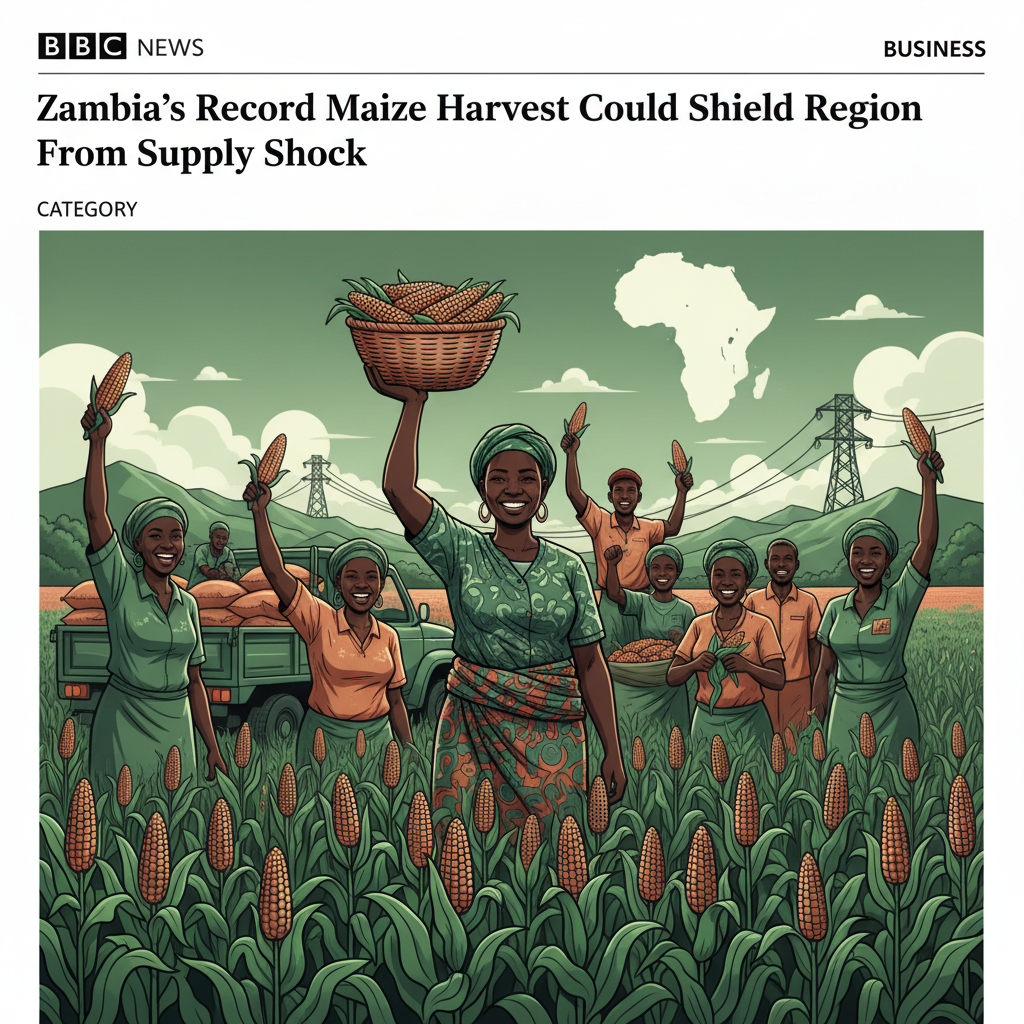
Zambia has once again proven its agricultural potential within the Southern African Development Community (SADC) region by securing a bumper maize harvest. This robust agricultural output has generated a substantial national surplus, establishing Zambia as a critical food-security buffer for neighboring countries facing escalating climate challenges and dry spells. As regional food systems grapple with erratic weather patterns and structural deficits, Lusaka's surplus capacity offers a much-needed stabilizing influence on cross-border grain markets. The timing of this agricultural success is particularly crucial as meteorological and agricultural experts project a more challenging 2026/27 production season across Southern Africa. Persistent droughts and unpredictable rainfall have severely hampered crop yields in several neighboring nations, threatening millions with food insecurity. By maintaining strategic reserves and facilitating controlled exports through bodies like the Food Reserve Agency (FRA) and private grain traders, Zambia is uniquely positioned to avert widespread humanitarian and economic distress in the sub-region. However, this surplus also brings logistical and economic challenges that require careful navigation by policymakers. Transport infrastructure, cross-border trade regulations, and storage facilities will face intense pressure as regional demand surges. Ensuring that grain movement does not compromise domestic food security or spark artificial price inflation locally remains a delicate balancing act for the Ministry of Agriculture. Farmers and cooperative unions have called for efficient logistical planning to prevent post-harvest losses and ensure fair pricing. Beyond immediate crisis management, this milestone underscores the urgent need for long-term investments in climate-resilient agriculture across Zambia. While favorable rainfall in key farming blocks contributed significantly to the current season's success, over-reliance on rain-