An Unprecedented Moment in Zambia's Judiciary: All Courts Closed — But Is the Reason Genuine?
POLITICS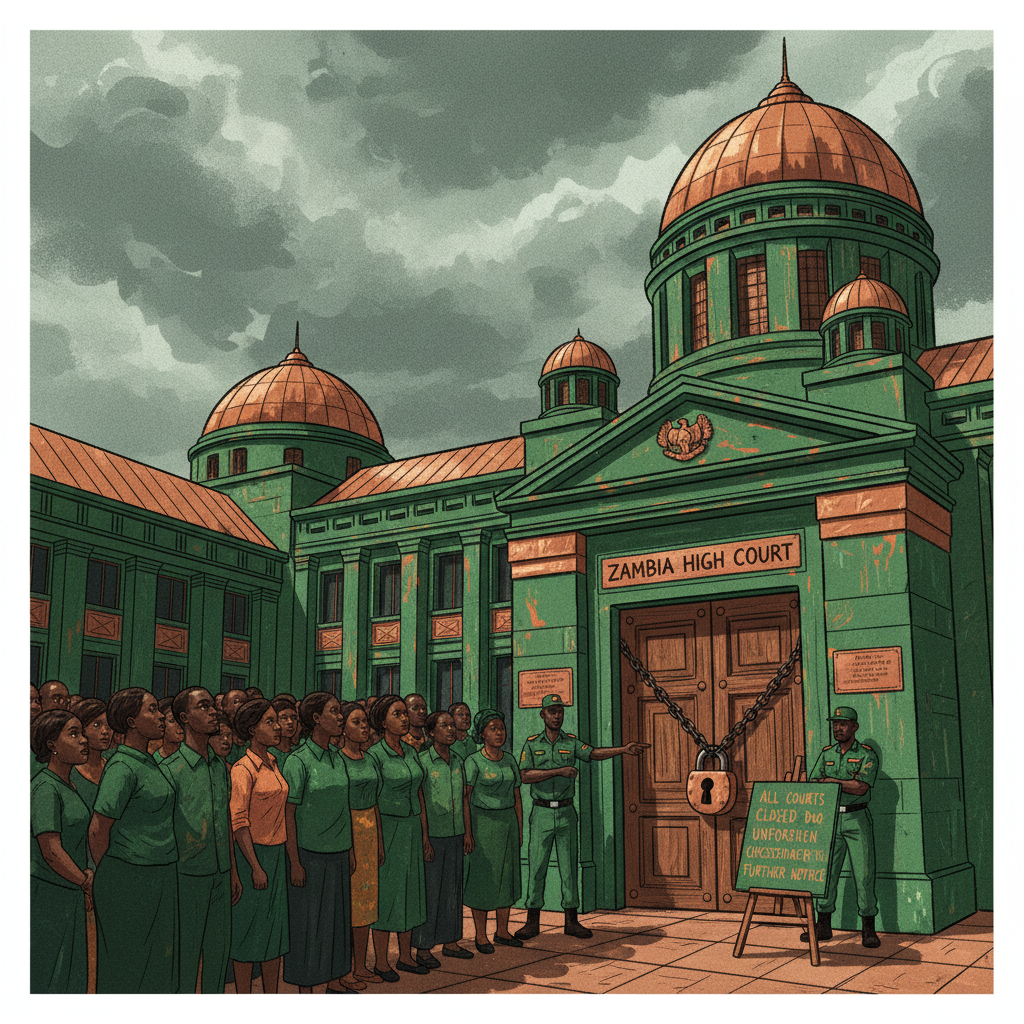
Lusaka — Zambia's entire judiciary remained closed on Monday, in the final stretch of the constitutional window for opposition leader Brian Mundubile to file a court challenge against the results of the August 13 presidential election. A memorandum dated August 24 and issued by the Judiciary's Chief Administrator, Nalishibo Imataa, told all staff not to report for work, stating "for security reasons, all members of staff are advised not to report for work." The memo, circulated to the Chief Justice, the Deputy Chief Justice, and the heads of the Constitutional Court and Court of Appeal, gave no further detail. Police spokesperson Godfrey Chilabi said security assessments were ongoing but declined to elaborate. Inspector General of Police Graphel Musamba said the Zambia Police Service, working with other security agencies, was carrying out risk assessments at selected government premises nationwide to identify vulnerabilities and prevent threats to public safety. The shutdown was not confined to Lusaka. Beyond the Supreme Court complex and High Court in the capital, High Court premises in Chipata, Livingstone, and Ndola were also sealed off by armed police, with lawyers turned away at some locations. Eastern Province's police commanding officer, Robertson Mweemba, referred questions about the Chipata closure to national police, who did not offer further explanation. The Electoral Commission of Zambia declared President Hakainde Hichilema the winner of the August 13 vote on August 18, with 2,965,326 votes, or 60.49 percent. Mundubile, standing for the National Reconciliation Party for Unity and Prosperity under the Tonse Alliance banner, took 1,856,217 votes, or 37.87 percent. The Constitution gives a losing candidate seven days from that declaration to petition the Constitutional Court, a window that expired as the courts remained shut. Mundubile has said his campaign documented "serious irregularities, inconsistencies and circumstances" in how votes were counted,