DID YOU KNOW?Until 1999, the MMD had a clean sweep of all the then 19 parliamentary seats in Southern Province
POLITICSBy Zambian Observer — Zambian Observer
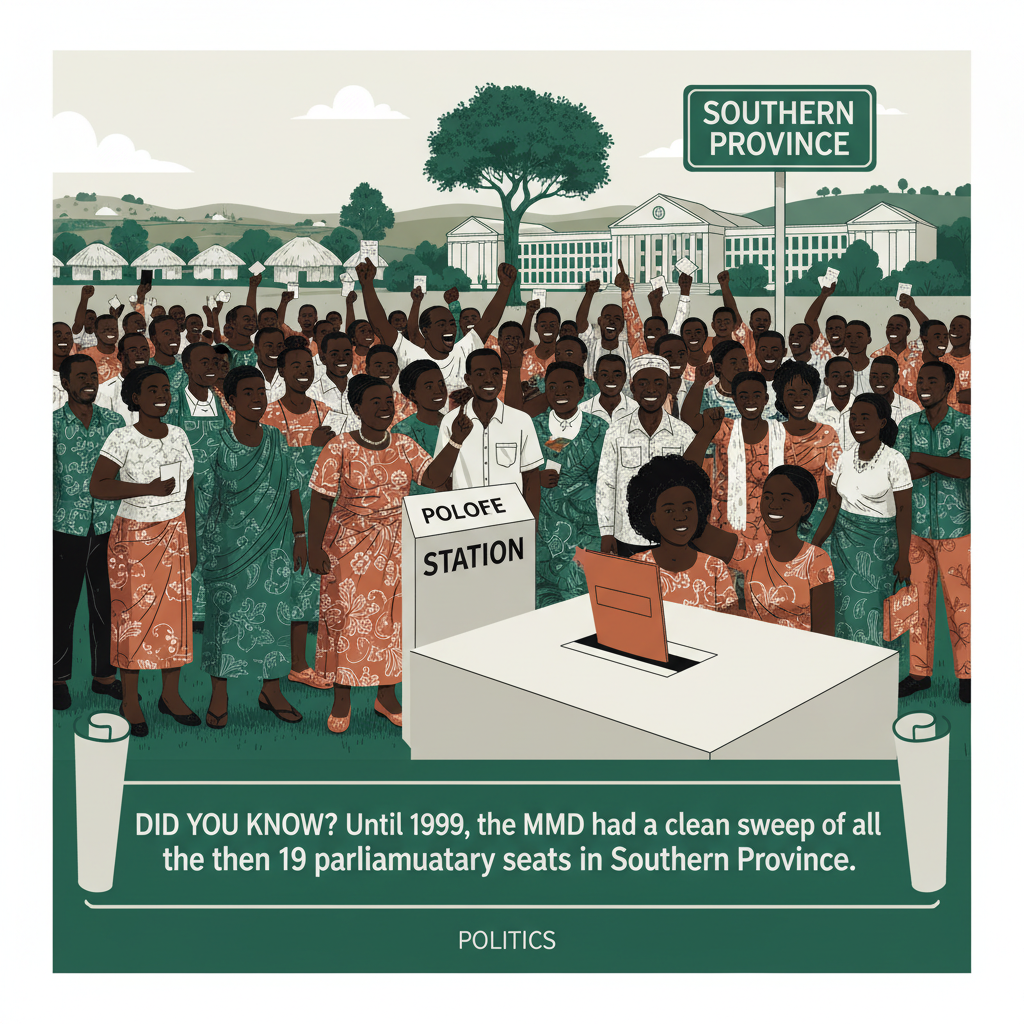
A fascinating look back into Zambia's rich political history reveals a time when the political topography of the country was vastly different from what it is today. Until 1999, the Movement for Multiparty Democracy (MMD), under the leadership of Zambia's second republican president, Dr. Frederick Chiluba, maintained an absolute dominance across the Southern Province. During this era, the governing party achieved a remarkable clean sweep, capturing all 19 parliamentary seats in a region that has since become famously known as an opposition stronghold. This total dominance, however, was not destined to last as the political winds began to shift dramatically towards the turn of the millennium. The formation of new political movements and shifting regional dynamics catalyzed a massive realignment of voter loyalty in the southern parts of the country. Disillusionment, changing socio-economic conditions, and the emergence of charismatic regional leadership quickly eroded the MMD's foothold, turning the province into an impenetrable fortress for opposition politics for decades to follow. Analyzing this historical shift provides vital context for understanding modern Zambian electoral politics, where regional voting patterns have become a defining feature of democratic contests. The transition from a monolithic MMD representation in the south to a consolidated opposition base demonstrates the fluid and dynamic nature of political allegiance in Zambia's young multi-party democracy. Observers note that political parties ignore these historical shifts at their own peril, as regional sentiments often reflect deeper underlying socio-economic grievances and aspirations. Today, political analysts frequently revisit the 1999 watershed period to measure the evolution of party politics and voter behavior. As generations change and new political entities rise, understanding how a ruling party once commanded every corner of the Southern Province serves as a poignant reminder of how