HH challenges ZNBS to build affordable, decent housing
ECONOMYBy Zambia Daily Mail News Website
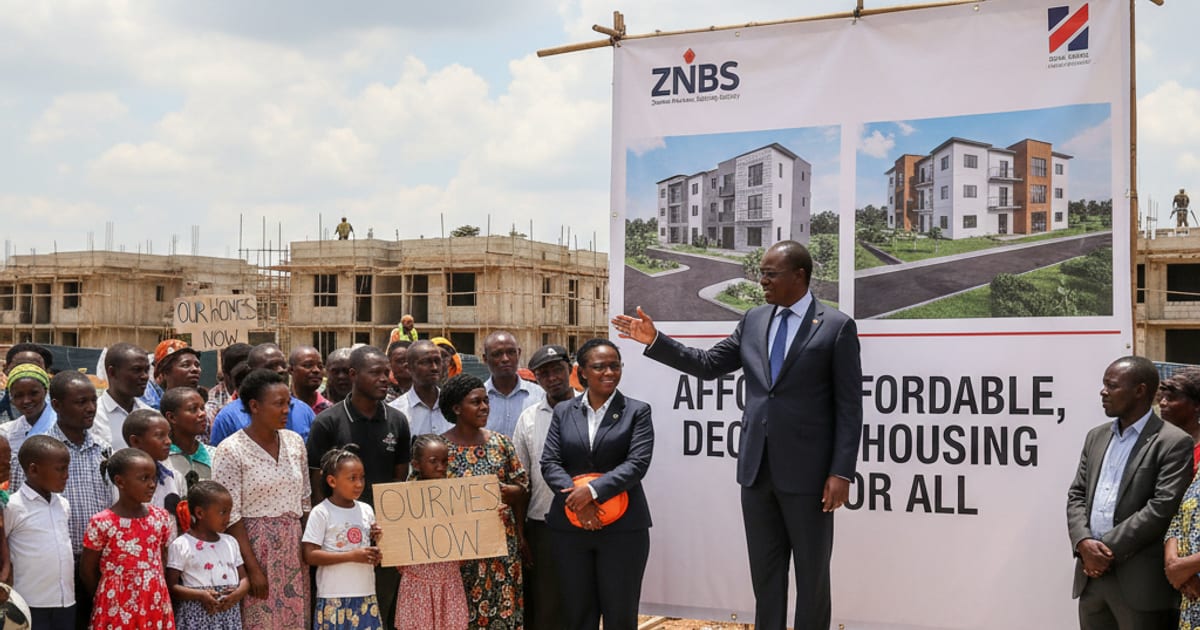
**President Hichilema Challenges ZNBS to Redefine Affordable Housing Beyond Capital's Confines** President Hakainde Hichilema has issued a clarion call to the Zambia National Building Society (ZNBS), urging the institution to significantly broaden its scope and impact in providing accessible and dignified housing solutions across the length and breadth of Zambia. Speaking emphatically at the recent launch of the ZNBS head office, the Head of State underscored that the provision of quality housing is not merely a luxury but a fundamental human right, one that must extend far beyond the bustling confines of Lusaka and into the nation's often-underserved provinces. This directive firmly aligns with the government's overarching decentralisation agenda, which seeks to ensure equitable development and opportunities for all Zambians, regardless of their geographical location. The President's address was particularly pointed, challenging ZNBS to foster aspirations for modern, high-quality living even in areas traditionally overlooked by major developers. He specifically cited towns such as Kasama, envisioning a future where residents there could realistically aspire to reside in "global standard, gated apartments," akin to the sophisticated developments often admired in more developed nations, including neighbouring South Africa. This bold vision is a direct mandate for ZNBS, an institution whose core mission explicitly involves mobilising financial resources for mortgage financing and, critically, increasing the nation's housing stock. President Hichilema stressed that the Society's historical role now demands an even more proactive and innovative approach to meet the growing housing deficit and elevate living standards nationwide. The President's pronouncements come at a crucial time when Zambia faces a significant housing shortage, estimated to be well over 1.5 million units and growing annually. This deficit disproportionately affects low-to-middle-income earners and