Zambian Nurse Debora Kapisha ICE kidnapped at Boston’s Logan Airport is free — released one day after more than 100 nurses and supporters rallied outside her hospital
WORLDBy Zambian Observer — Zambian Observer
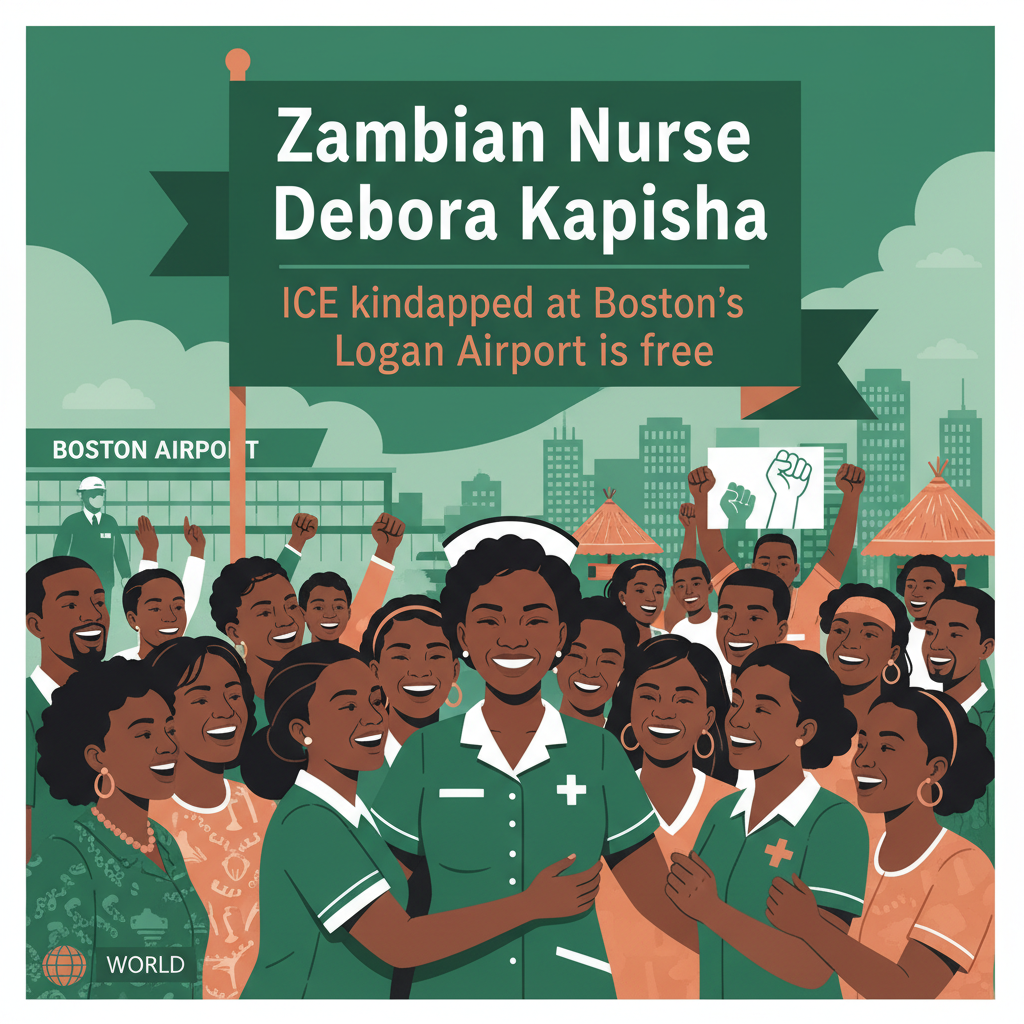
Debora Kapisha, a 28-year-old medical-surgical registered nurse from Zambia, has been released from U.S. Immigration and Customs Enforcement (ICE) custody following a swift and intense mobilization by her union colleagues and community advocates. Kapisha was detained on July 30 while traveling through Boston Logan International Airport, sparking immediate concern and outrage across healthcare networks in New England. Her detention triggered a rapid response from the Maine State Nurses Association and National Nurses United, culminating in a powerful emergency rally outside Maine Medical Center in Portland where she is employed. More than 100 nurses, community members, and allies gathered on the hospital's lawn to demand Kapisha’s immediate release and to protest her planned transfer to a detention facility in Louisiana. Union leaders emphasized that Kapisha, who moved to the United States from Zambia, is a beloved healthcare professional and a vital part of her hospital unit. Supporters argued that her detention disrupted a critical member of the local medical workforce at a time when experienced nurses are profoundly difficult to replace, while underscoring her legal authorization to live and work in the country while her asylum application is processed. While ICE officials contended that Kapisha was subject to removal proceedings due to an expired visa status, her legal team and union representatives maintained that her pending asylum status protected her and permitted her employment. The swift community backlash successfully thwarted attempts to move her out of the region, keeping her close to legal counsel and her support network. U.S. Representative Chellie Pingree and union organizers announced her subsequent release, allowing Kapisha to return home to Maine as her legal proceedings continue. The case has drawn significant attention back in her native Zambia and among diaspora communities, highlighting the precarious legal tightrope walked by many skilled i