PRESIDENT HICHILEMA SATISFIED WITH PROGRESS ON LUSAKA-NDOLA DUAL CARRIAGEWAY
BUSINESSBy Unknown — Zambian Observer
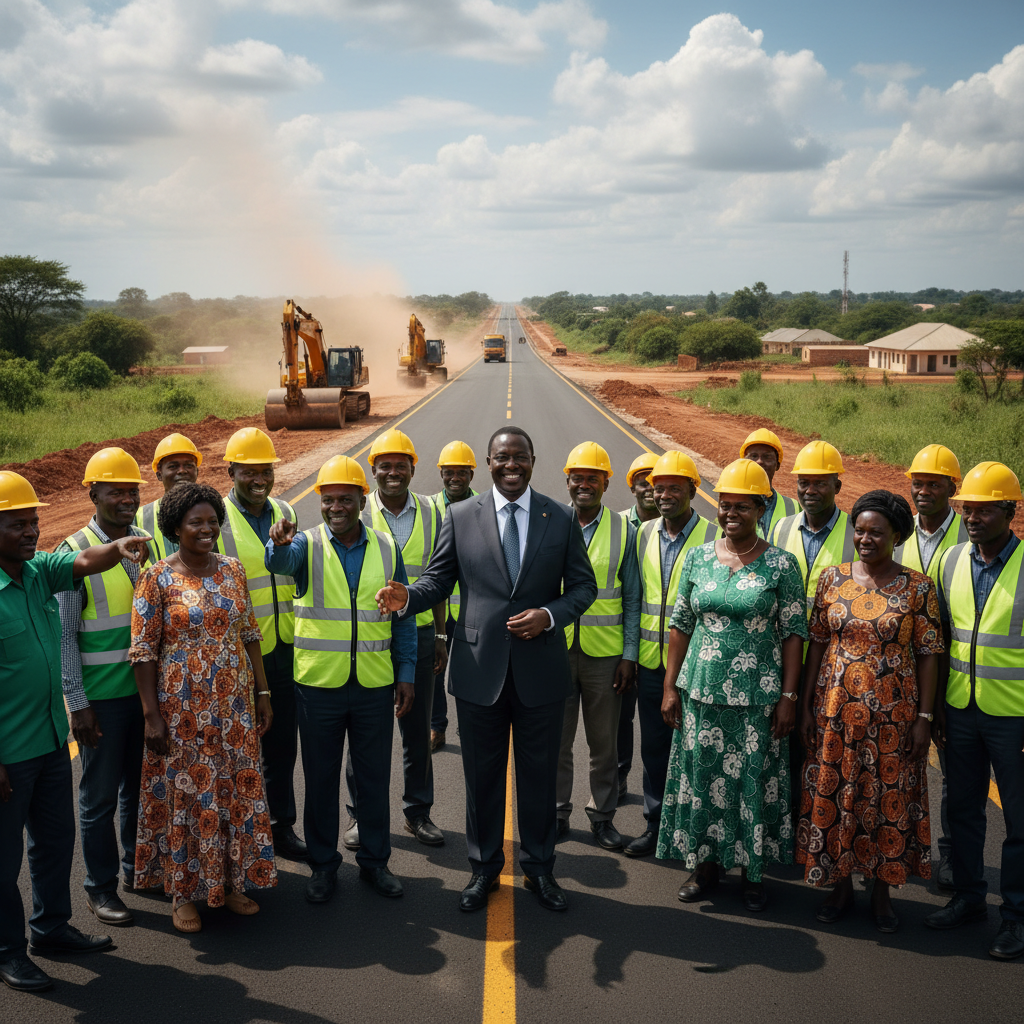
LUSAKA – President Hakainde Hichilema has lauded the substantial progress and commendable quality of work observed on the Lusaka-Ndola Dual Carriageway, a pivotal infrastructure development poised to transform Zambia's economic landscape. The President's remarks, as reported by the Zambian Observer, underscore the government's commitment to delivering key projects under the Public-Private Partnership (PPP) model, which aims to leverage private sector efficiency and funding for national development. This ambitious undertaking is designed to upgrade 327 kilometres of the existing road into a modern dual carriageway, significantly improving the flow of goods, services, and people between the capital city and the Copperbelt Province, Zambia's industrial heartland. The Lusaka-Ndola Dual Carriageway project, valued at approximately US$650 million, is not merely a road construction initiative but a comprehensive infrastructure package. Beyond the main dual carriageway, it includes the rehabilitation of 45 kilometres of the Masangano-Fisenge-Luanshya Road and the construction of vital bypasses totalling about 30 kilometres in Kabwe and Kapiri Mposhi towns. These bypasses are crucial for alleviating urban congestion, enhancing safety, and preserving local road infrastructure by diverting heavy haulage traffic away from town centres. The project also involves the construction of new toll plazas and the upgrading of existing weighbridges, integral components for sustainable road maintenance and revenue generation. The project's financing structure is notable for its reliance on local institutional investors, with the National Pensions Scheme Authority (NAPSA) contributing a significant US$300 million, or approximately 46% of the total cost, alongside the Workers Compensation Control Fund Board and the Macro Ocean Investment Consortium (MOIC-LN). This local financing model is a testament to Zambia's growing capacity to fund its own development agenda, reducing dependence on e